Thursday, June 26, 2008

The Madness of King George: Deceased Artiste George Carlin


It used to be that when a recording artist died, you broke out their records to reminisce. With the advent of video, you could supplement your wistful memories of the person’s work with a “video night,” watching old tapes of their performances. Now in the era of YouTube, when a beloved performer dies, it’s onto that hub site… and just hope the copyright holders haven’t caught on yet.

So it is that I salute George Carlin with a “survey post” of amazingly rare (and amazingly thorough) uploads on YT. Carlin was a very important performer to me for numerous reasons, the No. 1 being that I attended Catholic school for waaaaay too long, and his Class Clown album helped me survive the experience, by pointing out how absurd the whole thing really was (and, I’m sure, is). He also is, along with Groucho Marx, one of the first comedians I really began to personally identify with, on an attitudinal level. I had all kinds of heroes and icons during my childhood and adolescence (and still do, as evidenced by the Funhouse), and Carlin was one of the ones who spoke directly to me — through the set, through his vinyl, and, yes, through his gloriously cartoonish tones of voice. I revered Steve Allen for the same reason: obviously smart guy making silly jokes, doing silly gestures, not afraid to make a fool of himself while still being really, really fucking sharp intellectually.

I guess my interest in Carlin as a kid was also a function of the “forbidden”-ness of his comedy. I began hearing about him from my Dad, who stayed up “late” and watched things like the Tonight Show, and was a major fan of really silly/smart comedy. Thus, I had the experience everybody in those days had with both George and the fucking immortal Richard Pryor: his stuff was on TV late, you weren’t allowed to hear his humor, therefore it must be sought out. And like every kid who did hear Carlin and Pryor, I was richly rewarded with insane laughter from the “new” language, crazy voices, and ungodly brilliant delivery, but also learned about rebellion in a way that was far more subtle than the eventual discovery of the rockers and actors who dominated my adolescence. Both George and Richard were obviously developing the turf that Lenny Bruce conquered first (in fact, one of the many reasons I wanted to hear Lenny so much was Carlin’s constant nods to him in interviews). They both moved off in separate directions: Richard with intensely personal material and broadly, brilliantly cartoonish characters and voices; George with his examinations of language and social hypocrisy, the minutiae of everyday life (what later got tagged as “observational” comedy), and sheerly silly musings and images that ranged from the in-your-face puerile to an almost sophisticated weirdness. In the latter regard, I HAVE to point out an influence on George no one ever cites, one I can hear heavily in his work: Lord Buckley! Check out my blog post on the “Most Immaculately Hip Aristocrat” and tell me if you don’t think George’s low-down gravelly voice (used for those strangest-of-strange concepts) wasn’t copped with love from the Lord.

One thing that made Carlin so exceptional as a comic is the fact that he kept producing new work over a span of decades, and was intent on polishing it as best he could, offering a completely new set of material every few years. I grew to love him, however, through his records, with AM/FM, Class Clown, and Take-Offs and Put-ons (his first LP, I had the Pickwick version, curiously not missing anything!) getting heavy spins on whatever player I had at the time. Although some of his material, including the early ’70s stoner musings bits (“Sharing a Swallow,” “The Elevator”) and even some of his fastest bits (“Wonderful WINO”) were pictures-in-words and worked best as audio material, his rubber-face and incredibly goofy body gestures were lost if you weren’t watching him perform the piece. Thus, the reason to check out even the meagerest of his HBO specials: as Pryor is best viewed as a stand-up in his three “concert” films, Carlin is truly preserved for the ages in his cable specials, which he made the focus of his work for the last two decades of his career, a very wise move (and one that still allowed him to act in a movie here and there — yes, he was actually good in The Prince of Tides! — and write three whimsical humor books in the process).

George's regular TV appearances made him a continued presence in my fan-life, even during what I consider the lowest period of all: he tended to think of the mid-’70s as the meager era (he said he couldn’t even watch his appearance on the first SNL, but I think he’s terrific), but for me the years 1978-1981 roughly are as painful as it got. I haven’t seen it since it aired, but I remember a routine on Fridays that was threadbare (“where’s the blue food? We want the blue food!”), and was the type of thing that probably inspired Rick Moranis’ spot-on impression of him on SCTV (which George, generally wildly open-minded about younger comics, did not like, according to Dave Thomas). He rebounded from that very, very low point with his HBO “resurrection” in Carlin at Carnegie (1982), where he started refining the comedic persona he had for the next quarter-century: a wryly incisive, filthy-mouthed social inquisitor who, as he gained in years, became openly cranky and exhibited no hope for our continuation as a species (in this regard, George is uncommonly like Bob Dylan, whose Endtimes beliefs seem to be the one thing he has kept and nurtured since his Christian sojourn).
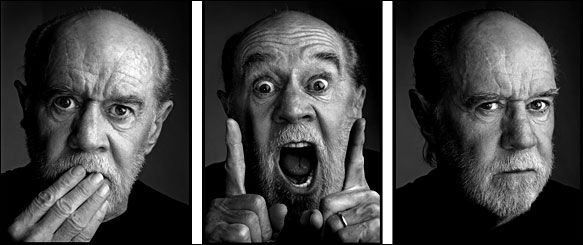

I looked forward eagerly to George’s HBO shows, even though I have never in my life subscribed to the service (thanks all of those who let me watch ’em). From Carnegie to Back in Town, he had me amused as well as enlightened (he also borrowed Lenny’s penchant for preaching through sarcasm). The shows did acquire a “bit by bit” success/biding-time ratio from You Are All Diseased (1999) on, with some bits being pure brilliance, and others seeming like wordplay filler. The joy of it always being that, no matter how meager the filler was, his set-piece bits were wonderful — even when he seemed visibly unhealthy, as he did in Life is Worth Losing (2005). At the time he did that special, he was 68 or so and recovering from alcohol addiction with what I believe was that bizarre medication that seems to curb the patient’s tendency to want to drink but also makes their head look like a balloon (check out late 1980s Sinatra for further evidence). Even in that somewhat saddening show, some of the bits were still tight as hell, it was just that his delivery was slightly off, which was deadly for his material, contingent as it was on his rhythms and variance in voice. Thankfully, his last show, It’s Bad for Ya (2008), saw him a little faster on his feet and able to run through his familiar laundry-list bits with more fervor (and with a very nice gesture, a framed pic of the Man, Richard P., on the show’s “set”).

I met the man for only about two minutes, having him sign his first book Sometimes a Little Brain Damage Can Help (a publication his obits seem to have forgotten) at an appearance at the Musuem of Television and Radio. I’m glad I got to tell him how important Class Clown had been to my childhood, and how much I loved his comedy. He was gracious, did the autograph thing, explained something about the photo on the inside cover that didn’t need explaining (he discovered as he was talking that there was already a photo caption for it). In watching the clips I link to below over the past few days, I’ve come to realize how impressive his achievement was (simply staying funny at all after four decades is an amazing task — just look at how many of our comic gods from the Seventies are silent or massively unfunny today; the Eighties guys, well, they began sucking in that very era….). I’m glad he will receive the Mark Twain Prize, which within a few years of its inception became a popularity contest rather than an award of lasting merit (rather like the AFI Tribute awards). Surely Sahl, Berman, Nichols/May, Dick Gregory, the Smothers Bros, Woody, and several others need to be awarded that prize (they needed it well, well before the “Comic Relief” hosts got theirs), but George truly does belong in the company of the award’s first two winners, Richard Pryor and Jonathan Winters. Now, onto the clips, man….


I found that two posters did all the work for Carlin fans on YouTube. A few months ago, the first gentleman posted all of George's albums and all of his HBO specials. I will leave you to move through that wonderful mass of terrific comedy, but will point out (despite the fact that the poster didn’t want people to embed his videos) that he also has put up some “off-road” (as they call it in the trade) recordings of Carlin appearances, plus the contents of the “bonus CD” that was included in the box set The Little David Years, which I never bought because… well, I got all the albums goddammit. The two tracks I would draw your attention to are a short snippet of George as a Top 40 rock DJ (terrific!) and the routine "Lost and Found", which finds him in full flourish moving in and out of his Lord Buckley voice (the routine also has a heavy Lenny influence in the repetition of the words: lostandfound, lostandfound, lostanfound, thankyoumaskman!).

I recommend you pour over George’s splendid Little David albums and his HBO shows at your own leisure, as long as they remain posted (thanks, Devil-guy!). For the video rarities, I point you toward another poster who has taken care to specialize in uploading Carlin TV appearances, which allow us to chart his movement from nightclub comic in a suit, to hippie-dude in a T-shirt and jeans, to middle-aged guy with a perfected delivery. First, what looks to be the oldest footage of George as a solo act (he started in a team with Jack Burns; their album, which was retitled "Killer Carlin" when reissued, is here). He’s doing JFK here (Hefner noted on Larry King that Carlin’s impression pissed off Joseph Kennedy Sr. when he visited the Playboy Club, nice honor for George!). The first full-fledged dose of material we get is from a 1965 Merv Griffin appearance, wherein George does his TV commercial shtick.

The best bit of early George is this Hollywood Palace appearance in 1966 where he’s introduced by Jimmy Durante (!) and does “Wonderful WINO,” one of his classic early bits.


George continued to do formulaic bits throughout the Sixties, with some of them sounding remarkably alike, as in these Smothers Brothers and Hollywood Palace clips (for a real blast, hear Ron Carey do the same damned bit in a different context, on his comedy LP). George finally appears in a beard on Playboy After Dark and seems right on the verge of going hippie:


Here, we have an early longhair appearance, in 1971 on The Mike Douglas Show. I was pretty surprised he could do all the anti-Vietnam and roach-smokin’ humor on staid ol’ Mike’s program, this clip is definitely a great find. George's obit in the New York Times quoted him as saying "scratch any cynic and you'll find a disappointed idealist." Here is that idealist (who later urged people not to vote, as it implied "consent" to the corruption of government....):


Where I first saw George (and Pryor, and Robert Klein, and…), on The Flip Wilson Show, here doing his newly minted stoner think-pieces including “Sharing a Swallow.”


In addition to a 1972 Tonight Show appearance , the seminal TV appearance is George’s guesting on the Lennon-Ono guest-hosted Mike Douglas Show. He gives a preview of the Class Clown material, seems particularly mellow, and even does some of his Lenny impression before they cut to a commercial!


And the following year George guested on The Midnight Special. Now completely settled into his hipster role, he talks about when “grass swept the neighborhood.”


Two more TV clips: working through some “werds” on The Midnight Special and doing Mike Douglas again, but seeming worse for the wear in 1975. He does his “God” routine, getting all the voices right, but gravelly as hell (still, some good viewing). Also consulting his notes (Moranis’ impression was indeed spot on, for that period). Once George had fully fused his stoner sense of time and space with his observational outlook, you had some wonderfully trippy work, as here on the Tony Orlando and Dawn Rainbow Hour. What was the smartest decision George made in regard to the show? He made a deal to just do five minutes of stand-up a week, and never, ever participate in the show’s sketches (like a little island of existential humor in the middle of a vaudeville procession).


By 1978, George was beginning to wilt a bit, as seen here on The Carol Burnett Show. This routine, by the way, was a concept also done by Robert Klein and David Steinberg earlier in the 1970s, the “every record ever recorded” bit. Perhaps the most touching clip from this era for me (and it is a lean era, believe me) is this clip of George entertaining an audience of kids with part of his “Class Clown” routine, if only because I laughed like hell at George at the same age these kids are at (I was a teen when this show aired, though, and never knew it existed… until YouTube).


Farewell, you cranky old bastid, thanks for the laughs.

Thursday, June 19, 2008

Funhouse “find” of the month: a cult quartet on For One Week Only

One recent discovery on YT that has entertained me for a few hours are terrific documentaries from another (see below) Jonathan Ross-hosted series about cult directors. This series, For One Week Only, was only composed of four shows, but they are power-packed for fans of cult cinema. They offer glimpses at a quartet of directors that are definitely hardcore cineastes, and only two of the four can be glimpsed anywhere on our “indie film” networks here in the States.

The first and most “above-ground” of the cinematic deities is David Lynch. He is viewed here while he was enjoying the success of Twin Peaks and had entered his middle period of extreme violence and self-conscious strangeness (I’m very happy to say Mulholland Drive and Inland Empire show him back to the completely independent, unsettling vision that he started out with). He is always an amiable interview subject, and here we are treated to comments from many of the folks who helped work on his initial masterpiece, Eraserhead. And yes, Nicolas Cage does seem like a coked-up drip in his talking-head moments.


The second critically beloved director who was saluted on For One Week Only was Pedro Almodovar, whom I respect for remaining true to his original work and building upon it for his most recent wonderfully scripted melodramas. When this documentary was shot, he was promoting the opening of Tie Me Up! Tie Me Down!


The series also profiled the amazing Alejandro Jodorowsky, who gave us the first great cult midnight movie, El Topo. His comments on why he likes violence in movies are truly funny and wonderfully disingenuous. He is one smart and kick-ass surrealist.


Finally, the series paid tribute to the work of one of my very fave filmmakers, Aki Kaurismaki. Aki does his best deadpan in the interview segments with Ross, saying his work is “shit” and he’s sorry for everyone who’s ever watched it. The documentary is a superb introduction to Kaurismaki’s brilliantly subdued oeuvre, offering choice clips (most of AK’s movies are not available on DVD) and suitably circuitous answers from the mighty Finn himself. I am a worshipper of Aki’s work, and this was indeed my “find” of the month….

Exploitation Directors a Go-Go (or is that Boo Boo?) The Incredibly Strange Film Show

Forget Hulu. Forget these uploading sites that try to compete with YouTube, offering us major-corporation sanctioned movies and TV episodes. Some of it is indeed worth watching, but for the true scavenger of pop-culture, and “everything from high art to low trash… and back again” (our Funhouse motto, which I haven’t used in this blog since I started the damned thing), the site of choice is still YT.

And why would that be? Well because posters like PaulKuk, as he is known, have uploaded some major must-see programs onto the site. There were a few milestones in the study of crazy exploitation — the Kings of the Bs, the first Psychotronic publications (Xeroxed and then mag-ged), and yes, even the Golden Turkey book by the now intolerable Michael Medved and his brother (although the last-mentioned simply roasted the flicks and offered little info of substance). The finest guide to way-out exploitation was the Incredibly Strange Films book by the Re/Search folks, which I believe has remained in print in the quarter-century since it first came out. That particular book was never built upon in American culture, but it did spawn (without residuals for the original writers including V. Vale, I believe) a British TV documentary series that, for exploitation fans, has never been equaled in terms of offering an introduction to the filmmakers who are must-sees for those about to embark on a regimen of innovation-trash viewing.

The host was Jonathan Ross, who when the program appeared in the early ’90s was a charmer, at least to American viewers who hadn’t been exposed to his snarky, witty British chat show (which I do wish was on BBC-America in place of Graham Norton). The people interviewed and profiled on the program were a very good first sampling of the best of the weirdest low/no-budget filmmakers out there. Paul on YT has uploaded the entire series of shows, which aired here in the States on the Discovery Channel (if memory serves) and have never been rerun to date, and have never been issued as a DVD set over here. They are all indispensable viewing, and I’m glad they are now readily available for free on the Net (I think only the Mexican wrestling episode is missing).

The show offered profiles of gents who have of course bobbed into the mainstream like John Waters, George Romero, Sam Raimi, Stuart Gordon, Jackie Chan (when he was awe-inspiringly terrific, the episode is superb), and one of the greatest Hong Kong filmmakers of his generation, Tsui Hark. Also, low-budget moviemaker Fred Olen Ray put in an appearance, right after his Hollywood Chainsaw Hookers had hit video shelves over here. The programs that desperately cry out to be seen, however, are those covering the Old Masters of exploitation. An Ed Wood profile gave us the brass tacks about our favorite Angora-wearing auteur, while Ross and company also delved into the work of Funhouse guest Herschell Gordon Lewis:


He also drew back the veil on the mystery that is the great Ray Dennis Steckler, madman comedian and frightmaster from the old school, creator of the uncategorizable Rat Fink a Boo Boo.


We got to see the legendary Doris Wishman, the best known female exploitationer of the era, a woman whose utter lack of interest in depicting sex in a sexy fashion (and radically weird incompetent editing style) made her one of the most outrageous softcore directors of all time.


I have to single out, of course, the hour-long portrait of the mighty Ted V. Mikels, a man who has lived a few lives in his time on this planet and is still cranking out low-budget features from his home base in Las Vegas. I interviewed Ted in the mid-90s on the show and did my best to convey the complexities of his story; I also wrote a piece for Time.com on his way-out oeuvre. The Ross documentary is a good quick primer for those who want to see him in his element, supplemented by interviews with his "castle ladies."


Perhaps most importantly Paul has uploaded the Russ Meyer episode, which was NOT shown over here, as Russ has holding on tight to his copyrights at that time, and didn’t want the many clips included by the British producers shown on American TV (at least that was the story that circulated ’round these parts).

Between Allen Funt and Guy Grand: the "street" comedy of Dom Joly


Okay, so I’m not quibbling with the cellphone as a concept, it’s a linchpin of modern civilization for better or worse. The "whole world as open-air phone booth” concept still has me at wit’s end, though — to hear so many voices with so little to say, and saying it so loudly! The women are hopeless chataholics, the guys are absolute morons repeating their locations over and over (or their educated counterparts, the show-off preppie assholes having a work conversation in public). So what can we do in the face of such overweening “sharing” of one’s every single move, every single thought, motion, decision? Make fun of it, of course!

To this I leave Dom Joly, a British comedian/entertainer/writer whom we don’t know at all on these shores. His absolutely BRILLIANT (to use the fave Brit adjective) Trigger Happy TV had a short run over here on Comedy Central, but it was quickly relegated to the very late-evening hours, and according to what I’ve read online, was a watered-down version of the original (even thought what I remember of it was still pretty witty and downright strange). Joly does the Candid Camera thing, oh yes he does, but there is actual thought and (gasp) an actual point to most of his in-public pranks and experiments. Yes, Allen Funt claimed his show’s intention was to show how people responded to various unusual situations, but we all know that this cornerstone of American cruelty TV was actually a joy to watch because of its focus on the embarrassment and stupidity of its subjects. When he was able to branch out, Funt did a film (1970’s What Do You Say To a Naked Lady?) which proved that the sociological was less at work than the prurient and gaze-at-a-car-crash impulse in the Candid Camera equation.

Anyway, Joly is an extremely savvy British humorist who devoted Trigger Happy TV to on-street pranks that had a point or, better yet, were completely surreal (most involving animal costumes which, hey, are always a nice little counterweight to the realism of any urban street corner). Some classics of his lower-key bits are his Grim Reaper appearing around London, his “burglar” character,, ”stalker mice”, a bit in a hedge-maze, and a gag from a later series in which he shows up in front of some of the world’s wonders and offers an opinion to a fellow tourist.

His “louder bits” include a wonderful French lesson , a public-performer character he calls “Krazy Kat,” some brilliant abuse of the Guardian Angels, rabbits who can’t control their lust in public, and the perennial asshole with loud headphones in the subway or other public place. Oh, and the very reason I created this post, his genius bit “taking the piss” (as the Brits say) out of every moron talking loudly on a cellphone. I don’t know the guy's lengthier works (or writings), have only seen his work in these small snippets available on the Net, but he is a minor god who in his comedy is operating on the same principles that moved Guy Grand in Terry Southern’s classic The Magic Christian. “Making it hot for them,” indeed.


The crowning touch to his work is the fact that he doesn’t punctuate the stuff in the way that every American Candid Camera show has — he lets the gags run without a narrator (subtlety, who’d’a thought that would make things funnier?), using the actual street sound and slightly subdued present-day indie music on the soundtrack, and NO LAUGH TRACK to indicate when’s something is funny. One of my favorite touches was the use of a Jacques Brel song under one gag (which is not all that funny — guys in dog suits do kung fu — but hey, the Brel sets it off, man!).

Joly has continued to do this kind of work on other UK TV shows we haven’t seen over here, including World Shut Your Mouth and The Complainers. I think he’s brilliant and deserves some BBC-America exposure (remember when PBS used to air this kind of sharp comedy? That was one lifetime ago.), but I assume the failure of the Comedy Central Trigger Happy has prevented that from happening thus far. So we can take comfort in the fact that he is very well represented on YouTube, and in fact has one poster who has specialized in putting up his gags.

Wednesday, June 18, 2008

Watching Steve Allen on pot: Mailer's vision

Regular viewers of the show and readers of this blog will know of my affection for big Norm (see right below) Mailer. Viewers of the show will know of my utter worship of the inimitable Steve Allen, who remains sadly un-enshrined on DVD at this moment. And while I know I just did a blog entry concerning Mailer, it’s my birthday today, so I’m going to share one of my discoveries, a fascinating piece by Mailer in which he recounts his marijuana-enhanced viewing of Steve’s show back in the 1950s and the perceptions he gained from it.

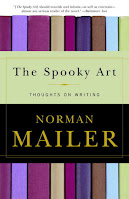
I will only excerpt a few lines of the piece here; to read the whole thing check out Mailer’s Pieces and Pontifications, or better yet get a condensed version of it in his sort-of patchwork but always engaging book on writing The Spooky Art (2003, pages 192-7). 

What’s interesting to me is that Mailer wrote this well, well after the fact — it comes from a piece he wrote in the late 1970s called “Of a Small and Modest Malignancy, Wicked and Bristling with Dots” about the medium of television (he was no mean titler, that Norm). Perhaps this was just too weird for publication back in the Eisenhower era.

While I might dote on Mailer’s presence as a TV talk show provocateur, a bizarre actor, or wildly uneven filmmaker, the guy was a master writer, and so I was more than intrigued to read his pot-take on Steve’s audience interviews on the Tonight Show and the previous (and succeeding) shows he hosted. Mailer begins by talking about two commercials that fascinated him, and then notes
He would watch Ernie Kovacs and Steve Allen late at night and would recognize that they knew what he knew. They saw how the spiral worked in the washing machine commercial, and why Dynaflow did it in oil….
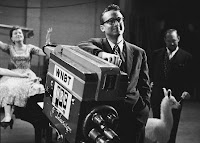
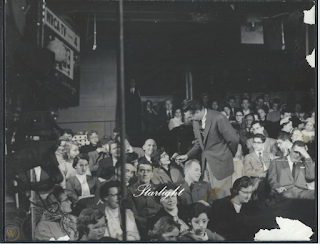
Steve doing audience interviews
(innocent enough...).
He goes on to discuss how television reflects American society, and helps deaden it. He uses Allen’s interviews to illustrate a point about subliminal sex on the tube (and how the mind can travel when under the influence…):
Or: studying the tourist, he learned much about American fellatio. TV was scintillating for that. Next to the oil of Dynaflow and the spiral in the washing machine came the phallic immanence of the microphone. A twinkle would light up in Steve Allen’s eye as he took the mike and cord down the aisle and in and out of the impromptu interviews with his audience, snaking the rounded knob right up to the mouth of some starched skinny Middle West matron, lean as whipcord, tense as rectitude, a life of iron disciplines in the vertical wrinkles of the upper lip; the lady would bare her teeth in a snarl and show a shark’s mouth as she brought her jaws around to face and maybe bite off that black dob of a knob so near to touching her tongue.
A high school girl would be next, there with the graduating class on a trip to New York, her folks watching back home. She would swoon before the mike. She could not get her mouth open. She would keep dodging in her seat, and Steve would stay in pursuit, mike extended. Two nights ago she dodged for two hours in the back seat of a car. My God, this was in public. She just wouldn’t take hold of the mike.
A young housewife, liberal, sophisticated [is next…] She shows no difficulty with [the mike], no more than she would have with a phallus; two fingers and a thumb keep the thing canted right. There can be nothing wrong, after all, in relations between consenting adults. So speaks her calm.
After that, he turns to the male audiences members and it’s a whole different story. One can’t be sure what the later, more conservative Steve would’ve thought of Mailer’s take on his show, but I’m sure the vintage, experiment-prone Steve would’ve completely understood….

Thursday, June 5, 2008

Smart TV: Mailer and McLuhan debate on CBC

In celebration of my finally finishing Mailer’s last novel Castle in the Forest, I offer the following video "find" (not currently housed on YouTube). In the book, Norman offered up his final surprise, a playfully constructed meditation on human nature, using the most evil figure of the 20th century as a springboard. Thoroughly entertaining and thought-provoking, as were all of Mailer’s finer pieces. For those of us who are older than 30, we remember and treasure Norman as both a man of ideas and a public hellraiser. The guy was a dynamo on television, even though he made it evident that he was scared of the power of the medium and his inability to ace it (his reflections on Capote’s charm and utter mastery of the talk show echoed this frustration).

So here we have him at the height of his public visibility, a guy who wasn’t writing fiction and wouldn’t again for nearly a decade. He was too busy "living the era," so to speak, and thus he made the most fascinating series of TV appearances, playing the role of provocateur, and getting in the biggest disagreements with people on his own side of the political fence. His amazing encounter with the still-brilliant Gore Vidal (check out this recent interview) on The Dick Cavett Show is an example of two men of ideas getting in a childish argument and creating kinetic, unforgettable television. Here he has a much mellower opponent, genius theorizer Marshall McLuhan on a 1968 Canadian show called The Summer Way (what a mellow name for a news program!).

To watch McLuhan on television is enlightening, because the man literally wrote the book on the medium, and yet was an academic, so he couldn’t control it (he lacked the personal charisma that was/is the sole criterion for television “stardom” in any era). Here he and a somewhat mellower but still pugnacious Mailer discuss little matters like alienation from society and the modern era, traveling, the use of metaphors, and passing moral judgment. McLuhan is never anything less than brilliant, but perhaps his finest moments here are the evocations of computer language (information overload, pattern recognition) to describe why the artist is more valuable to society than the scientist (at that point, in ’68). Mailer’s best moments come at the end, when he evokes the ultimate existential situation (leaping from a burning building) and starts to discuss one of his favorite subjects, man and violence, just before the credits roll (he’s just gettin’ warmed up!).

I’ve said before on the show and in this blog that, much as I love crap culture to pieces, the saddest part of American society these days is how proud we are of being stupid. Here, 40 years ago, were two eggheads of different stripes being unabashedly smart on television. I mourn the fact that these days we’re left with only sound bites, The Charlie Rose Show (gag), and off-mainstream items on public access and C-SPAN.


via videosift.com

Deceased Artiste Bo Diddley: rockin' out in Rockula

Yes, Bo appeared in a Cannon Film that you probably don't remember, the horror comedy musical Rockula(1990). It looks stinking bad, but Senor Diddley has a guest starring role in it, so I had to give this bit of celluloid happy pain its own blog entry.

“We’re Cannon Films and We’re Dynamite!”

As a child of the Seventies (a mere babe of the Sixties), I tend to look down on Eighties nostalgia, since so much of it is purely tacky and not even (ahem) innovatively or offensively tacky. Well, there was one independent movie studio, Cannon Films, that pretty much embodied the era, for better and (mostly) worse, and thus I was interested to see that one British fan has created a Cannon tribute site, and has posted countless trailers (and logos, he loves the studio’s logos) on, where else, YouTube.

First, the site. Reading the voluminous materials he’s collected on Cannon Films, you do learn a lot about the company (and there are plenty of wonderfully overwrought posters and video-box art to delight yer orbs). To put it plainly, Cannon Films started in the late 1960s, handled a number of foreign features, like the great Inga (1968), and also produced some terrific low-budget American films, like Joe (1970).

The studio’s best-known incarnation started in 1979 and ended exactly a decade later, when “the Go-go boys,” Israeli cousins Menahem Golan and Yoram Globus too over (their names were really both Globus — Menahem named himself after the Golan Heights). G&G had the instincts of exploitation filmmakers, but Golan also harbored artistic ambitions, and under their guidance, the studio produced a very mixed bag of movies, ranging from their first hit, Breakin’(1984), to enormously popular bad action flicks and modest arthouse hits.

You can find all of the Cannon trailers here on YT, but I thought I’d single out a few for special consideration. I will avoid the most obvious of their productions, the lower-budgeted films that did boffo box-office, things starring Charles Bronson (aging Bronson), Stallone (post-Rocky/Rambo Sly), Norris (then just an ex-karate champ, not yet the superstar), and Van Damme (on his way up to a pretty rapid descent). Cannon also fostered action heroes who were solely their own, like Michael Dudikoff and Robert Ginty (check out this trailer for Exterminator 2 -- ah, the VHS “buzz”!) I will instead point out the kind of sleaze picture I would actually make tracks to attend, things like The Naked Cage (1986), a fairly standard but still pretty vigorously sleazy women’s prison picture:

URL

Golan and Globus were top-shelf merchandisers who did things that even Menahem’s former mentor Roger Corman hadn’t thought of, like shooting two films with one star simultaneously (Missing in Action and its sequel) just to maximize productivity (sounds like Bollywood). They also tried every so often to do weirdly mingle things they knew were popular internationally (like romance, and rap music!) with stuff that wasn’t (like an opera star and a clearly European-based plot). Here, as with many of this poster’s trailers, is a trailer for an unknown item called Berlin Blues (1988) that is most likely more entertaining than the film it represents — something that makes this YouTube poster’s trove all the more essential.


The studio got fairly enterprising as the money from the kickboxing and breakdancing movies flowed in. One experiment consisted of making features out of fairy tales (taking a major leaf from Shelley Duvall’s “Fairie Tale Theater”). And just to make the films more memorable (and damnably kitschy), they were turned into musicals.

Like Snow White (1987, starring Diana Rigg and Billy Barty!)


Or The Frog Prince (1986, with the girl from Annie, Helen Hunt, and Pee-Wee’s “Jambi,” John Paragon):


Or two older Broadway vets markin’ time, Robert Morse and Sid Caesar in The Emperor’s New Clothes (1987)


Golan’s artistic ambitions led him to direct some very middling pictures, but I would single out his Mack the Knife (a post-Cannon effort, thus not rep-ed on YT) as it has got to be the most misguided Threepenny Opera adaptation ever mounted (with a new, mediocre translation, and Oliver!-like choreography — "consider yourself" un-entertained!). Of course, Golan also directed The Delta Force(1986) so he knows how to make some first-rate, grade-A exploitation crap when he wants to.

But there were “art pictures” from Cannon made by other directors. Much as Coppola had with Zoetrope, the Go-go cousins funded famous directors to make films for them. Some of the results were misguided (my least fave Polanski pic, the execrable Pirates; Godard’s ambiguous and amusing but meandering King Lear(1987) — which opens with this conversation between JLG and Golan), and some were decent (Barfly with Mickey Rourke doing Snagglepuss, Maria’s Lovers with a very sexy Nastasja Kinski and a perennially crying John Savage, Runaway Train). A small handful were excellent (That Championship Season, 52 Pickup — not an art film, but a quality thriller). The two that were by far the best and were true auteurist masterworks were Robert Altman’s terrific adaptation of Sam Shepherd’s Fool for Love (1985):


And Cassavetes’ final personal film, Love Streams (1984). No trailer for this has been posted, but here is one of the most beautifully genuine moments, showing Gena Rowlands’ perfection and Cassavetes’ own view of the tenuousness nature of love:


I would end on that beyond-par sequence, but I must point out that Cannon also produced two Funhouse favorites, two movies that are so far over the top they deserve to be celebrated, but in a much different way than Love Streams. They are Norman Mailer’s brilliant bit of oddball noir Tough Guys Don’t Dance (1987).


And a jaw-dropper par excellence, the sci-fi rock musical (with Biblical overtones) The Apple (1980).


Oh, and as for the Go-go twins? They both left the company in 1989 (after their Superman sequel, among several other things, flopped). They continued to make excellent kitsch (including both Lambada movies!) and are both still alive, causin’ trouble and makin’ movies in Israel. It is noted on the Cannon Films tribute site that Menahem had a big success with a Sound of Music production that found the Nazis (and everyone else, of course) speaking in Hebrew.

Best and brightest of the pundits: Rachel Maddow


Since I still actively listen to the Device Forgotten by Time, namely radio, I am always glad to hear someone who knows how to use the medium properly (read: entertain and/or enlighten ME, I ain’t worryin’ about the rest of yez). In line with that, I will publicly proclaim that, yes, I’ve been listening to the trainwreck known as Air America Radio since its inception, and as the network has continually gained and lost ground on a creative level, there has been only one constant in the whole process: Rachel Maddow.

Rachel is best known these days as a talking-head on MSNBC (most notably Countdown, which I commented on below), but she has maintained her foothold in radio, a medium that she utterly rules. I’m taking nothing away from her as a TV presence: she is beyond welcome in the 24-hour news-net jungle. She is as fresh a face on the scene as Obama, representing a new kind of broadcaster (yeah yeah right, now’s the time to mention she’s an out lesbian. Okay, done). She looks different than the other women pundits on the “cycle,” she’s leagues smarter than just about all of them, and she has an extremely natural presence on-air, which is of course a double-edged sword.

Meaning? Well, I'm glad that MSNBC allows for a slightly less frantic pace than CNN or Fox, because Rachel's particular talent lies in explaining a situation clearly and concisely, while conveying her own opinion. She is quite open about venting her frustration with certain events and policies, which I like and respond to (see my post on Olbermann below), as it's something we haven't seen from the Left in the mainstream media; we have had exemplars of classic journalism like Amy Goodman, but they never exhibit any true despair or (more importantly) annoyance at the way things are going. Rachel, however, also possesses the worst ailment Left Wing thinkers suffer from, namely an overload of good solid information (information that, of course, the average American dunce would prefer to ignore, and does NOT want to hear about). This makes her have to speak faster on some of the pundit shows to convey twice the information in half the time (whereas hardcore racist expert "Uncle" Pat Buchanan can take his own sweet time about things, because he just believes in simple things, like war and White Folks). She is lost in the context of a panel show like the current MSNBC series “Race for the White House” (sorta like that late-night “America: Held Hostage” ABC series, but without the drama) because each “head” gets their two minutes and they’re out. She does not back down from the Right reps on these shows, but is also not a master of oneupsmanship, which is the key to these clusterfuck programs (possibly the most bizarre place to see nasty Left/Right arguments is on Larry King; then again, most things on King’s show are actively surreal — from his tributes to old show-biz to the several weeks he’s spent on those underaged moms in the Texas compound).

So we have a new presence in the pundit world that doesn’t quite fit into the mold. Her radio background came to the fore when she guest-hosted for Olbermann recently and she got the chance to interview guests, something that brought out her “warm” side from radio (see my McLuhan post above!) and her ability to clarify, footnote, and still make the conversation seem mellow. Interestingly, given her current work on TV, she has publicly expressed her doubts about appearing on the “TV machine” as she likes to call it, and had a very interesting exchange on her radio show with the ubiquitous Ms. Huffington, where she asked the latter if being a Left representative on TV merely opened the floodgates for more right-wing propaganda to be spread during the faux "debates" those shows thrive on. You wouldn't hear most pundits even stopping for a second to question their own legitimacy as experts, and for this I value Rachel all the more.

I’m glad as well that, despite the fact that her star is now rightfully rising, she has remained on the uneven, uncertain institution that is Air America Radio. For the moment, her show really runs only about an hour (7-8PM EST, normally 6-9PM), since she’s on MSNBC’s nightly run-the-election-into-the-ground-cast (which is aired on AAR, and man, you don’t miss a thing on radio), and the third hour of her show is a call-in fest hosted by her friend and “political guru” David Bender (who is extremely intelligent and incisive, but just doesn’t grab me as a host). That said, even an hour of Rachel on the radio is better than catching her only as a talking-head stuck in between “Uncle Pat” the friendly hater and various journalists.

I know that others share my appreciation of Rachel’s intelligence and easygoing media presence — in fact Time’s Richard Corliss (whom I admire as a critic, but am even more thrilled to count as a regular Funhouse viewer) wrote an article on Air America in which he proclaimed himself “president of the Tribeca branch of the Rachel Maddow fan club.” Sez RC, “Maddow, with a Stanford undergraduate degree and a doctorate from Oxford, is a natural radio personality: sensible, charming, with an easy-going commitment and flashes of impish wit. She'd please any listener, make any parent proud. And she's cute too.”

In closing, I can add nothing, except that I do hope that, whatever offers come her way in the news-net jungle, she will continue to stay on radio, since that medium really (really) needs as much help as it can get, especially in NYC. And if they bring her to TV for a Countdown-style show, I hope they rehire her terrific radio colleague — who was axed by Air America in its Mark Green-era crackdown on show budgets — the wonderful comedy writer and performer Kent Jones (only guy to get the Winchell bit right, and he’s not trying it on seriously, like that oh-so-aptly named Drudge dude). He and Rachel were a team for quite a while (from the “Unfiltered” show she hosted with Lizz Winstead and Chuck D. of Public Enemy — now those were some fun mornings — to the insanely awful 5:00AM slot). With Jones along for the ride, I can see an incredibly smart and (can it be?) easygoing left-wing political show that would represent (it can happen!) something new under the sun.

I would link to video clips of Rachel, but you can find them all here at the “Maddow fans” website.

Thursday, May 29, 2008

"The Missing Piece": The "adult" career of Shel Silverstein


Shel Silverstein was one of the most schizophrenic figures in pop-culture history. He is best known these days as a children’s book author (a deceased children’s book author), and his kiddie books are bestsellers that seem destined to remain in print for a long time to come. For information on them, check out the official website. I would heartily recommend one of the items NOT mentioned on that site, his "ABZ Book," which is actually a humor book leading the kids into some very dire predicaments indeed (ah yes, but Uncle Shelby could be a playful ol' man....)

However… (as Professor Irwin Corey would say) Shel had a whole other career, in fact several other careers, that were not so wholesome — and that’s why we love him so! His lyrics for hit tunes by Johnny Cash, The Irish Rovers, Dr. Hook and the Medicine Show, Marianne Faithfull, and countless country artists are well-remembered, but his ribald work, both in illustration and poetry, has not been as well documented. Since I consider it the Funhouse’s function to fill such voids, I here with offer someone’s uploading to the Net of his BRILLIANT epic poem “The Devil and Billy Markham.” The poem comes straight from the 25th anniversary issue of Playboy — and to my knowledge was never anthologized in any book. Shel did turn it into a “play,” which is a way of saying he had it performed in public settings (two other lives: as a playwright with works performed by Mamet’s Atlantic Theater Company, and as co-screenwriter with David M. on Things Change). I saw the piece as part of a presentation called “Oh, Hell!” at Lincoln Center, and man, was it amazing to see Dr. Hook’s lead man, Dennis Lecorriere, recite the whole fucking thing (and I do mean fucking — this poem’s got a lovely Heaven-Hell orgy scene). At one point, it was noted in the Playboy letters column that it should have been turned into a movie starring Kris Kristofferson, but I think it would play best as a piece of animation, perhaps narrated by the selfsame KK.

The poem is truly one of Shel’s finest and bugfuck-craziest works, and deserves to be in the public eye, even as much as The Giving Tree (in fact, I think they belong on the same shelf!) Read it in all its glory HERE. I don’t know if this MySpacer named Corey actually typed this all out (I’m betting he cribbed it from somewhere), but regardless, he deserves our thanks. Otherwise, you’d have to shell out for a Samuel French edition!!!

And just in case you wanted a peak inside the mind of this Renaissance Man of whimsy, sadness, and the freak-out, here is a biographical portrait that includes interview quotes from him (he rarely ever gave interviews).

Wanna see so-called “hidden” drawings by Shel? Here is someone’s posting of pics from a private notebook (now being sold publicly).

He's mad as hell — and one of the best things on TV


Though I consume an untoward amount of media every day, I had until very recently avoided watching “the pundit shows” on the 24-hour news networks. A few months ago I fell under the spell of the fast-paced Countdown with Keith Olbermann, and now count myself a camp follower. The main bone of contention with the show is Keith’s tendency to really let loose during his editorials (called "Special Comments"). I find this endlessly entertaining, on-target, and most importantly, true. The right-wing pundits are given to downright lying in their editorials, and if it comes down to a choice, I will take some histrionics to a barrage of made-up bullshit. Too much of the Left discourse these days is comprised of making people comfortable, of being “nice” to those we disagree with (I know that absolutely no mainstream Lefty, including Keith for that matter, is going to tackle McCain's record as a trained killer and POW in the Vietnam war, for instance; must we proclaim this borderline case a "hero" — did you see his demented wink the other day as he proclaimed how he'll never allow "defeat" in Iraq?). Since the right is composed of folks who basically pull out the traitor card every time they confront a person with a different viewpoint, I think it is essential to have at least one media personality on the Left who is really, really angry about the duplicity, the treachery, and downright genocidal impulse that rules our country (plus the stupidity… oh god, the stupidity… we are a nation PROUD of our stupidity).

Plus, Keith O. has shown a preference for extremely excellent comedians from the past in his obituary and tribute segments. He’s publicly proclaimed his allegiance to Bob and Ray, has “greeted” viewer Sid Caesar, and did a really welcome birthday tribute to the mighty, mighty Spike Milligan! The guy’s okay in my book. People forget one thing about the Howard Beale character in Paddy Chayefsky’s wildly prescient Network: he actually saw all too clearly what was going on in the TV news biz and government. He may have seemed unhinged but was telling the truth during his on-air meltdowns. More power to the "unhinged"!

Thursday, May 22, 2008

You *still* doesn't has'ta call him Johnson...

Glad to see that Bill Saluga is still in the game. Saluga has fascinated me for years because his main bit of shtick is so specific that it requires someone else setting it up, it spins into a coil of words, and then it's done (usually in less than two-three minutes, if that). For those who have never heard of Bill and his "Raymond J. Johnson Jr." character, he began as a member of the comedy troupe the Ace Trucking Company. Their ranks included Fred Willard, Patti Deutsch from Laugh-In, and the late George Memmoli (the "mook" guy from Mean Streets). All of the troupe were very talented, as is evidenced by their sketches available on various DVD boxes (they also appeared on the Lennon-Ono-hosted week of The Mike Douglas Show), and in the underrated Sixties montage-pic Dynamite Chicken. Saluga established his Johnson character rather early on (if a recent This is Tom Jones DVD box is any indication), and yes, is still doing it to this day on YouTube!

The bit started as a sketch performed by the ATC on variety shows, then it graduated to simply Saluga doing it on variety shows, then he began doing it on TV commercials, and he even wound up cutting a disco single, "Dancin' Johnson" (which is sadly not represented on YouTube, but is available on a blogspot blog for download, huzzah!). The bit is: someone calls him Mr. Johnson, and he responds with a long list of things you can call him, but you "doesn't has'ta call me Johnson." The bit became so ubiquitous at one point in the late '70s that Bob Dylan referenced it during his Xtian period in "You Gotta Serve Somebody." His line "you can call me RJ/you can call me Ray" was a nod from On High to Saluga's bit, which is as good as any way to remain a pop icon for the rest of yer life.

The one thing that has always been the coup de grace of the bit is the character's out-of-date get-up (which veered into zoot-suit territory at various points in the past). Given the amount of vintage TV on YouTube, I'm amazed there's only one or two small bits of vintage "Johnson." But it does appear like old "Raymond J." has decided to join us in the digital age.


Bill also now has an an official website, which features the above vid-sliver.

Pure pop: "Music to Watch Girls By"

We salute you Andy Williams, oh Tiki-headed god of easy listening. Andy had a big-time string of hits in the early ’60s, but what I have been endlessly fixated on was the number of times he “sang” instrumentals — as in, they wrote special lyrics to popular instrumentals for ol’ Anj to warble (or he just wound up warbling them). By the time I became aware of his existence (around the time I became aware of existence itself, in the early 1970s), Williams had sung a big number of songs to which they had added ridiculous lyrics. Probably the most memorably pointless example from the Seventies was his version of Barry White’s “Love Theme,” for which they simply added some feeble rhymes with the phrase “love theme” thrown in a bunch’a times. Andy had his own easy-lis’nin’ tracks that did blow me away in terms of their pure bubblegum spirit (”Happy Heart” being one of the highwater marks), but this little ditty, a lyricized version of a popular instrumental, is one of the catchiest of all. The lyrics are ridiculously grafted on but, hey, that’s the way it goes when you’re “making music to watch girls by….”


In searching for a proper link to “Happy Heart” above, I came up with an Andy impersonator (didn’t know there were any!), who mostly specializes in Fifties and Sixties rock impressions (it also turns out that venerable Eighties warbler Marc Almond tried the song on for size).

And because I’m daydreaming about the urban fantasies of the time in which I was born, lemme pass on this commercial, which became a hit instrumental (which, unfortunately, no one — even Andy! — wound up singing)


Here’s the instrumental, which was a hit for the T-Bones, accompanying somebody’s home-movie footage of L.A. in 1965 (scope out Sonny and Cher at the end):

A tad subtler than Musique's "In the Bush"

Been down a little lately, and there is nothing, and I do mean nothing, better to perk up a shameless mediaholic than some dippy tunes from the benighted Seventies (see posts below). This particular masterwork of silliness comes from the kitsch-fest to end all kitsch-fests, the Eurovision song contest. We never heard anything from Fredi and the Friends over here, but their “Pump-pump” is sheer genius. I do like the fat man — dubbed here el corpulento by the Spanish announcer — surrounded by two babes (it has the old burlesque seal of approval), but admit I prefer the leftover couple who had to sing the song to each other — it has that forced-duet quality that made so many variety show mini-musicals so blissfully embarrassing. The proto-Broadway show piano trills don't hurt any either:


Credit for discovering this goes to John Walsh (and his niece) over at the new site Bush League. John is truly a master of the “Web-find.” Regular viewers of the Funhouse will remember my journey through the land of the Furries, an odyssey that began with links provided by John.

Listening to the pump tune, I came in mind of this sweeter-than-sugar tune, which I heard again about two years ago on the Digital Choice music channels available on my cable service. I hadn’t heard it in over three decades, but found I could sing along with it. That bubblegum is some powerful stuff:

Hillary: the new-model Nader (or, the reason the Dems lose elections)


In this most busy of political seasons, I’ve been ingesting way too much punditry (the left-wing and MOR kind; I can’t abide conservatism in any of its guises). Why has no one made the comparison yet: our own N.Y. State Senator, the one who voted to go to Iraq, is clearly playing the spoiler, a la the once awesome Mr. N, and serving as just one more reminder that the reason the Repubs/rightwingers win elections is because they are organized and speak with one voice. Lefties like diversity to the point where nothing is agreed upon, and it all tumbles down into the current economy, the current war, and the current Chimp in Charge of all our fates….

NYC “unabideable”: the marbleized streets of the city

I’m a fast-walkin’ sonofabitch. I like to get where I’m goin’, and if I’m delayed for any reason, I don’t mind breaking into a sprint. The only problem with doing that these days (and, no, I have not taken a tumble on these fucking things, I just recognized it’s the most distinct of possibilities): many of Manhattan’s streets are no longer the grey, gritty-looking concrete of yesteryear, but are instead this pretty-ass marbleized surface that, in any type of precipitation becomes a sheet of slippery hell that will indeed cost ya a twisted ankle, a broken wrist, or at least, a humiliating dive. I became aware of the wild slipperiness of NYC’s streets — you knew it — when I had no health insurance for a long stretch of time and did take a dive on a Manhattan sidewalk in the snow (simply walking). Now, in order to not reproduce said instance, I am constantly watching where I’m going, and have noticed that the more “prestige” areas of the town have become slippery sheets of curbage, thanks to a super-pretty (pretty=bad in my lexicon; utilitarian=good) substance called terrazzo.

I found that this problem started a number of years back through a very old New York Times article that hails from the disco era, but just one look down as you walk in the rain, and you can tell that, once again, those who have insurance and want things to look nice are fully in favor of this faux look. This material now makes up large portions of the Grand Central area, Park Avenue, and other tonier vicinities (through which we peons must move as we migrate to our daily attempt to pay bills). I don’t expect this trend to decrease — in fact, as is evident from the fact that the above link connects to a 27-year-old article, the situation will become far worse as time goes one, as this is now a city of extraordinarily rich people and extremely poor ones (each highrise erected=merely a pied a terre for a foreign or domestic dignitary who has a few mil layin’ around). If you have insurance and tumble on a terrazzo surface, you can get treated and be good as new; if you don’t, you can do what I did and use ice packs and Ace bandages (as the laser surgery wasn’t even an option) and have a joint that’s a nice viable candidate for premature arthritis. As Hubert Selby used ta put it (mocking an ad campaign of the time): New York, it’s a fuckin’ summer festival.

Thursday, May 15, 2008

NYC Public Access in the early ’80s: a look back

This little gem was posted by Coca Crystal, but deserved its own entry in this blog. It comes from a program hosted by NYC radio and TV fixture Richard Bey, and seems to be the “2 on the Town" segment that Coca refers to in the opener clip linked to below. It reflects the trend in coverage of access to focus solely on the sex-related programming, as Coca is the only non-sex show included in the round-up. As an access producer, I can’t tell you how many pieces I’ve read about NYC cable-access that mention Robin Byrd, who hasn’t been on public access for years (and hasn’t done a new show in eons), but has been making mucho dinero on leased access Channel 35, which was Time Warner’s way of distancing itself from the emerging adult content on “Channel J” (the old public access channel on Manhattan Cable) and has become a mind-deadening corporate-controlled station filled with nothing but faux-erotic 1-900 crap advertising since Goldstein’s Midnight Blue signed off the air several years back.

Anyway, this clip harkens back to the salad days of Manhattan access, starting out with the full range of shows, but settling on interviews with Byrd, Goldstein, Ugly George, and the rather-tame-by-comparison Coca.

Public Access Hall of Fame: Coca Crystal

Long before there was YouTube, there was… public access. I would love to present the cream of the access crop on this here blog, and hope that in the future I have the time to digitize the many oddities I’ve collected on tape just since the early 1990s (I was a latecomer to this gorgeous medium, starting the Funhouse in 1993). For the time being, I can point to the wonders that have already been posted on, yes, the access-usurper that is the mighty YT.

Coca Crystal did a wonderfully free-form variety/talk program on Manhattan access from 1977 to 1995 called (in the paraphrased words of Emma Goldman), “If I Can’t Dance, You Can Keep Your Revolution.” The best thing about pure access is that it’s hard to believe that it ever existed — if you watch the recently released DVDs of Midnight Blue (particularly Volume 2), you’ll see a world that seems imaginary: a television program that had ads for hookers and hustlers, traveling orgies (with buffets!), porn mags, and beaucoup massage parlors and gay swing clubs (in major NYC apartment buildings and hotels). Similarly Coca’s program is a record of a MUCH more liberated time: her range of guests, her loose attitude to interviewing and show structure, and, most importantly, her lighting of a joint on the air at the outset of the program. She even included “review” segments, where she and her cohosts would discuss the grades of pot being sold around the city. Oh man, a very, very different era….

Check out her opening here:


And there’s a cool closer where everyone just dances here.

Of course, the thing that will sustain interest in these programs are the “name” guests that appeared on them, like Debbie Harry and Chris Stein.

And a little piana player named Phil Glass
(listen to the roster he gives out with at the opening of the clip—take a flying trip back to ’80s NYC, man).

But of more interest to me are the truly radical and yes wonderfully weird folk who guested on Coca’s show. This list includes another access host and NYC citizen emeritus, a man who was a Beat, a hippie, a Fug, and a goddamned troublemaker, the blessedly strange Tuli Kupferberg:


And if you like Tuli’s form of revolution, but you need to have your mind warped even further, please do sample the immortal Tiny Tim discussing veteran’s day with the show’s cohost, a writer named Renfreu Neff. I used to review for a magazine that published writings by Ms. Neff — I was sure that the name was a pseudonym, but was assured by the editor that it was a real person. I was interested to learn (you can loin so much from YouTube) that this lady was indeed named Renfreu, and used to cohost Coca’s show, which I caught the last few years of.


And if Tiny was a bit too run of the mill for ya, let me introduce you to his finest discovery, singing/songwriting granddad Izzy Fertel, who had a singular fascination with women’s liberation.


I thank Rich Brown for leading me to Coca’s trove on YT. Rich was the host and co-producer of another legendary Manhattan access show, Beyond Vaudeville. There are only a few BV clips on YT, but let me assure you, it was the very cream of access. A good representative clip can be found here.

Goddamn, New York: Where on the Dial is Joe Franklin?

I know, I know, Big Joe retired several years back and can still be found doing short “flashback” segments on a local AM station. But the Joe that diehard New Yorkers remember was a man that kept us company in the early morning and late evening hours, a man whose guest roster was surreal in its eclecticism — literally every profession was covered on his panel at some point. The low-budget genius of Joe’s program has been brilliantly summed up elsewhere — please treat yourself to Nick Tosches’ wonderful “Memories of Joe” which originally appeared in the Village Voice, can now be found in The Nick Tosches Reader, and can be read here.

But of course to know Joe was to watch him. There are some samples of Franklin at his finest on YouTube, and I have a whole raft of short little moments of wonder on tape that I desperately need to transfer, but here are three good slices. First, Joe’s amazing intro, circa the ’80s-’90s when he had a Joe-poses-around-NYC montage to start things off.


Then this bizarre interview with mighty Joe by the late club promoter/gossip maven Baird Jones. Here we get into the area of Joe-legend, one of the many celebrity-studded (and utterly undocumented) tales that he has unleashed upon us in recent years. I still recall his description of what seemed to be a makeout session with Marilyn in his last autobio (he also sampled Jayne Mansfield’s charms, according to the book): they were writing a Marilyn autobio (not the one that did circulate called My Story, some other one), and I believe the way it is put in the book is that both MM and Joe were in an amorous mood, and it quickly descended into a haze “of Chinese food and Garry Moore.” (Gar was on TV at the time.) His story here concerns JFK and Nixon helping him tend to a dead man. No shit.


And how could I not succumb to the charms of this short promo for Joe’s show, back from the era where he was using “Axel’s Theme” from Beverly Hills Cop as his theme (I, being a hardliner, really missed the “Twelfth Street Rag”). Please dig.

Thursday, May 8, 2008

Powers That Be: New album and videos on YT from Tony Powers

A few weeks back I wrote a blog entry about my decades-long fascination with Tony Powers’ great song and video ”Don’t’ Nobody Move (This is a Heist).” I should note that Tony’s latest album is a welcome return for this “mystery” figure whom I had thought of as a “character actor who occasionally makes music,” but is really a one-time million-selling pop tunesmith who has been doubling as both an actor and a singer-songwriter who’s equal parts bright and literate, and streetsmart wiseass.

The album, called Who Could Imagine, finds Powers working in a number of pop genres, from old-fashioned ballad (“Lorraine”) to proto-Calypso (“Goin’ into Space”). As such, the album functions almost like an actor’s “demo reel,” showing how Tony the songwriter can channel his talent to fit a number of different moods. In reading about Tony online, I found that some of the songs were in fact written a few years back (and, yes, the classic “Don’t Nobody Move” gets an ever-so-slight update here), but they fit right in with these ever-so-fucked-up times. In line with the current era, Powers aims for the jugular with a few socially-conscious songs, including “Sadly.” (lyrics here)

Powers is working in the same vein as Carole King, Leonard Cohen and (especially) Tom Waits throughout, but I have to aim my focus squarely one more time on his ability as an urban sketch artist. His “Cartoon” offers a very nice and quite accurate review of livin’ in this very burg (although I hear that now TP inhabits the car-choked climes of L.A.): “The train is late 'n the/air-conditioning’s broke./And I’m wedged between/these two fat fucks whose/clothes are soaked./Is this the life?/All the people in Commercials/have so much fun,/a bunch of happy baboons/Is this the life?/Or are we just in rehearsal?/Excuse me — is this the feature/or is this the cartoon?”

Powers is a cult figure and, from what I’ve been reading, a “musician’s musician.” As such, I guess Who Could Imagine confirms that he is indeed a very cool tree falling in a very hip forest. Yez all should give a listen — the lyrics are on Tony’s site, and you can hear the first 2 minutes or so of each song on via the CD Baby site.

And just because this is a visually-oriented blog, I’m happy to report that the other two music-vids that Powers made back in the Eighties are up on YouTube. The first is a whole ’nother slice of NYC location shooting: Tony in a romantic mood with actress Lois Chiles on the Staten Island Ferry for the song “Odyssey” — which was later covered by KISS!


“Midnite Trampoline” is a two-part gem (at least on YouTube) that finds Powers playing a gigolo who isn’t quite… up to the demands of his profession (check out his ginzo buds, one of whom is played by a very young and svelte John Goodman). The video may not be as much of a shock to the system as “Don’t Nobody Move,” but it’s a nice piece’a lightly comic filmmaking that harkens back to the time when videos could be unpredictable in wonderful ways:

Forgotten '60s sitcom gem 2: He and She

Courtesy of the same poster who put up the item below, who calls himself “Mr. Retro” (thank you, Senor!) we have another lost Sixties sitcom gem, a one-season wonder called He and She starring the real-life married couple Richard Benjamin and Paula Prentiss. The show ran from ’67-68, and revolved around a cartoonist and his cute-as-hell wife who were young cosmopolitan folk along the lines of Rob and Laura Petrie, and Anne Marie and Don Hollinger.

Benjamin is an unusual performer who was very good as the filmic alter-ego of Philip Roth in two films (Portnoy’s Complaint must be seen, it is fucking amazing!), but he is better remembered by fans for his sci-fi turns in Westworld(1973) and the cult sitcom Quark (1977). I think he actually gave his best performance as the scumbag husband in Frank and Eleanor Perry’s Diary of a Mad Housewife (1970). He has worked as a director for the past quarter-century, but hasn't ever really lived up to the promise of his first two pics (My Favorite Year and Racing with the Moon). Prentiss made her debut as an attractive ingenue in Where the Boys Are but is best known for The Stepford Wives (1975).

The show features one of my all-time fave character guys, Kenneth Mars, who was the once and future Teuton from Mel Brooks’ classic Producers and Young Frankenstein, and the best-ever guest from the tip-top Fernwood 2-Night (the only guy who made the unflappable Martin Mull and Fred Willard start to break up on camera).

The whole damn thing is stolen, though, by Jack Cassidy as uber-ham Oscar North, a preening TV actor playing “Jet Man,” the character created by Benjamin. Cassidy was quite a show-biz pro, who is seen to best advantage in this clip from Dinah! doing a song used on SCTV as a theme for the Jackie Rogers Jr. character, “She Loves Me,” from the B’way play of the same name. It’s often been noted that Cassidy’s turn on He and She was the precursor to Ted Baxter on MTM.

Aaaaaaand, just in case you were wondering how was behind such the show, it’s the exact same team that did The Good Guys: producer/scripter Leonard Stern (also writer Arne Sultan, his cohort from Get Smart; Jerry Fielding did the music and Reza Badiyi put together the cute-as-hell opening and closing credit montages.

Forgotten '60s sitcom gem: The Good Guys

Fifties sitcoms are the blueprints for the genre (borrowed liberally from the radio and certain master comedians like Fields), while the Sixties sits moved into the very high-concept area with flying nuns, talking cars, goofy castaways, and sea-captain ghosts. This find is a low-key buddy comedy that I remember watching as a very tiny kid, but had no clear memories of. I’m happy to report it’s cute as hell, with some decent gags. The Good Guys ran only a season and a half (1968-70), and involved the dynamic between a down-on-his-luck diner owner (the blessed Herb Edelman) and his cabbie friend (uber-sidekick Bob Denver, fresh from his stint with the Skipper and Mary Ann). The show is charming and simple — Edelman tries to avoid the stupid plans hatched by Denver, while long-suffering spouse Joyce Van Patten puts up with it all. This particular episode finds Denver getting involved with a heartsick young musician and Edelman trying to avoid a rich rival (played by the priss exemplar William Daniels).

The show was created by veteran scripter Jack Rose (who worked on Bob Hope pics in the Forties and wound up doing things like A Touch of Class in the Seventies), and was produced by Leonard Stern (who produced comedies from Get Smart to Grace Under Fire). It's 40 years old this year. DAMN, I wish the “classic TV” networks would put stuff like this on.

Check out the pilot episode here:


Or just sample the super-’60s theme song here. The credits sequence was done by the long-unheralded director/title designer Reza Badiyi, who directed countless TV episodes of classic shows, was once Jennifer Jason Leigh's stepdad, and helped craft many credits montages, among them Hawaii 5-0 and The Mary Tyler Moore Show.

Loving You Has Made Him Bananas: Guy Marks

It may appear that I am wholly and completely bound up in the past from the entries on this blog, but I will note that I’m actually functioning in the present tense, I watch contemporary TV shows, follow present-day political developments (much to my chagrin), and am just as happy as the next fan when musicians “drop” their albums online for free, as has been the case this past week with Trent Reznor of that ol’ Nine Inch Nails. That said… I must indicate my joy at discovering nuggets from the past on this here Net, and so I present yet another mind-bender, a novelty tune by a comedian that most people forgot and even more never even hear of.

Guy Marks is best known by me for his appearance on a Dick Van Dyke Show episode where he performs at one of Rob’s house parties (damn, they had fun in the imaginary Sixties show-biz suburban environment). He was better known as an impressionist (click here to see him doing his shtick on The Dean Martin Show). Someone has uploaded him doing his novelty song “Loving You Has Made Me Bananas,” a parody of old big-band ballads, that contains the amorous phrase “Close cover before striking.” Yes, it’s goofy as hell, but I’m glad someone recorded the damned thing (and someone in the U.K., actually, check out the v.o. comment at the end). Guy is gone but not forgotten by those who remember goofy melodies.

(Don't) take the S train

Rather than rail on about the current dire political situation (where stupidity trumps substance each and every time--please god, no McCain), I’ve generally kept my Funhouse rants local, and focused on NYC concerns… like the subway. I am now currently earning dough in an office position that does indeed put me right back in the thick of the rush hour, which I’d been fortunate enough to have been missing for the past few years (come in late, leave late, no fuss, no muss).

Ah, so I’m back in the sardine-can misery that comprises the commuter’s daily journey, with the MTA undergoing what is clearly a slowdown (they recently got a fare hike—it’s time to find reasons to slow the trains down to convince us we “need” them). I have been trapped in two trains so far that could’ve been outrun by a little kid on a tricycle (going a total length of 10 blocks from stop to stop), and have been very disappointed that the list of excuses the conductor used to use for the arbitrary and downright sadistic slowdowns/stops has not been trotted out. As I remember it, the usual wildly ambiguous and carefully-worded-for-obscurity alibis for the fact that train has no intention of going ANYWHERE anytime soon used to run like this:

-“signal lights are holding us”
-“police action”
-“sick passenger”
-“passenger on the tracks” (rare one, everyone wants to see)
-“track work” (this one covers workers on the track—an extremely rare sight—or the fact that they’re rerouting things a few hours before said work begins)
-“train in front of us”

These days, only the last-mentioned is being used (c’mon, guys, imagination, use some imagination while wasting minutes/hours/passages of our lives!). We all of course know what that means—the train left the terminus point too late, the motormen did the three-in-a-row strategy that has worked so well to make NYC buses the utter winter nightmare they are.

So, I’m left wondering: if the all-pervasive excuse is “train traffic in front of us,” why in fact is the S train, which goes merely between Times Square and Grand Central Station (read: one fucking stop), not run on anything approximating a regular schedule? It used to be (yes, even during the nightmare Seventies and Eighties there were indeed small bright spots in the evil MTA’s horrid, wretched empire) that the S train could always be counted on to be at both stops, one filling up at TS and then leaving, the same at GC.

These days two are in service (mind you—there are three tracks for these hunks o’crap) only at rush hour, and the rest of the day, it’ll a good ten-minute wait to get into a crap-train that goes exactly one stop. A fast walker can clearly make the distance in the same time, and be spared the sardine experience.

In Thomas Pynchon’s classic novel V, the proto-beatnik/nihilist character Benny Profane spends his down-days “yo-yo-ing” around NYC, just ridin’ that S shuttle train back and forth, zoning out and checking out who’s going between the two major stations. Benny would long ago have been put in a straitjacket with the functioning of today’s S train (which doesn’t even run 24 hours a day, last I checked).

Yes, NYC sucked in many ways back in the good old bad old days (the charming past), but now in the high-tech, no-possible-reason-why-things-should-fuck-up-except-for-apathy 21st century, it’s much, much worse.

Thursday, May 1, 2008

Color Him Lurid: George Kuchar

Some filmmakers deserve our constant gratitude and admiration. Two of these are the Bronx’s own Kuchar Brothers, George and Mike. I have to admit that while I enjoy Mike’s movies (Sins o f the Fleshapoids is genius), I have a better knowledge of, and a diehard fan-fascination with, the warped, no budget creations of his twin, George. I think it’s an absolute shame the Brothers aren’t better known, and each time I see their best-known fan John Waters paying tribute to the exploitation filmmakers who inspired him, I wonder if he couldn’t throw just a little spotlight their way, as they are without question the first great no-budget genius-trash filmmakers (yes, he’s acknowledged their influence, and no, they didn’t have any actors the like of Divine, Mink Stole, or David Lochary — although their Bronx babes were mighty cute in a homegrown way — but it’s inarguable how much their work is the natural precursor to Waters’ classic midnight-movie classics). In other words, they need the press at this point — as much as I love and worship the work of Russ Meyer and H.G. Lewis, I think their reputations are safe as this point; the same with the great Kenneth Anger. It’s a tragedy that the sum total of their work on DVD is the sole release of Mike’s Sins….

In searching the Net for evidence of George’s crazed and wildly influential underground cinema at this exact point in time, you find that the Video Data Bank website has wonderfully lurid write-ups of the pics by George himself.

A bunch of the Kuchars’ films had been up on YouTube, but are now down. This could be due to the Brothers themselves or their copyright holders (VDB?) asking that the films be removed. OR it could be the most annoying aspect of YouTube, the ridiculous “three strikes” rule — wherein if you get three complaints or removals, all your videos are taken down (as ridiculous as the no-nudity-cuz-we-in-’Merica-ain’t-mature-enuf-ta-handle-it rule). For the time being only two GK pics are up:

Wild Night in El Reno (1977)


and I, An Actress (1977)


Someone has put up the very end of George’s perfect Hold Me While I’m Naked (the sound is loud, turn your computer down!):


Ten of George’s films, including the above trio, are available for viewing and downloading on the Ubuweb site. My advice is to download the files (right click and you’ve got ‘em), as watching them on the site always freezes up my computer. As the Brothers’ films continue to be restored in an ongoing project run by UCLA to preserve the greatest American underground films, I’m looking forward to SOME KIND of DVD releases of their finest, exquisitely gonzo work.

Here’s the UbuWeb URL. Have a lurid feast for yourself:
Click here

Tuesday, April 29, 2008

Hitchcock features and other goodies hidden among the public domain clips

I'm fascinated by what people upload in the way of classic cinema on YouTube, and am particularly interested by people uploading entire features, particularly ones that are copyrighted and could come tumbling down at any time. Thus, I humbly submit a few links to a person who's uploaded some public domain features, and has also thrown in a classic Roger Corman (featuring the best acting job by William Shatner, pre-Tiberius Kirk), the entire 1962 feature The Intruder aka "Shame."


The same person has put up the entirety of Hitchcock's Stage Fright, which is not primo Hitch, but does contain one of his few attempts to film a musical number (albeit one occurring on a stage) and an admitted "cheat," wherein we see a falsified flashback.

More importantly, he (I know, I know, I keep assuming these posters are men, since I know that guys have infinite patience for fanboy activity) has uploaded all of the much better Shadow of a Doubt, which contains a wonderfully creepy performance by the great Joseph Cotten. The coolest part in the entire movie (which is a classic Hitch construction, filled with doubling and identification with the killer figure) occurs at 3:00-4:30 point of this segment. “Are they?” Joe Cotten kicks ass.


The same poster has put up the only Elia Kazan noir, the "neo-Realist" noir Panic in the Streets, some fan-made music videos for songs by the horror-movie obsessed Texas psych legend Roky Erickson and a Here’s Lucy production number featuring the always sexy-as-anything Ann Margret. Also, this rather lonely and downbeat PSA featuring the young Billy Mumy (I’d swear the voice of the narrator is that of young Dick Cavett). Television is sanctified for kid's protection — that's why he's so depressed!

Thursday, April 24, 2008

'70s one-hit wonders: cinematic wonderment

I was super-thrilled to reconnect with this 1979 ditty, which has been playing in my mental jukebox now for the past three decades. The promo clip (that's what they used to call videos) is pretty ridiculously dippy, but the song still kicks ass, and features the best movie-music interlude I've heard in rock outside the work of the great Alice Cooper Group, as produced by Bob Ezrin. This single had it all: the filtered voice, a call-and-response chorus, a mega-dramatic melody, and lyrics that ya just can't forget. "I just been down to New York town/done my time in hell...!"

In researching the guys who recorded this, who named themselves (in a flash of sheer prescience) Flash & the Pan, I discovered that they were the Australian duo, Harry Vanda and George Young, who were behind the PERFECTLY immortal "Friday on My Mind" as the Easybeats back in 1966. Worthy of a major Funhouse salute.

'70s one-hit wonders: some travelin' music, please...

The band had a gimmicky name, the music had that pure-pop drive, and the song had a major hook (in fact some interwoven hooks, best kind) that wouldn't quit. I give you the British band Sniff 'n' the Tears' 1978 hit "Driver's Seat":

'70s one-hit wonders: nothin' matters but the weekend

I'll stretch the time-delineation here by one year, and include a 1980 one-hitter. The Kings doing their mighty "Switchin' to Glide," which is a neat, slick bit of electrified pop-rock. The song appears here combined with another—"Switchin'" starts at the 3:12 mark. I have no idea what the hell the title means, but I wish it had entered the lingo to mean something or other.


And as a bonus, let me throw a 1977 hook-driven gem, Jay Ferguson's "Thunder Island." Ferguson was a vocalist for the great band Spirit, who gave us (among others) two all-time classic tracks, "I Got a Line on You" and "Nature's Way."


Oh, okay, let me get carried away and point you to this godawful vid for yet another super-hooky tune by a guy who left a major band (in this case Fleetwood Mac). Bob Welch actually had his one big hit with "Sentimental Lady," but here's "Ebony Eyes":

'70s one-hit wonders: the peak of pop

There are certain high points in the art of the '70s one-hit, but I'm going to avoid ”Billy Don't Be a Hero” (although it would be VERY interesting to hear a song like this on today's pop charts--it really is a stupid-ass maneuver to volunteer to fight in a war of choice!). Instead, I have to focus on the British band Paper Lace's mega-classic "Night Chicago Died" (1974). Yes, indeed they are not represented on YouTube, except in one TV performance, performing "Billy" (which they had the original version of, and a big hit with, in Europe). Thus, we have fan-created vids for the song, such as this one:


And I just gotta include this "banda" version of the song in Spanish--check out "Senor Al Capone." Killer...


And another sublime bit of one-hit wonderhood, "Skyhigh" by Jigsaw, a song written for The Man From Hong Kong(1975), one of the post-Bond vehicles for George Lazenby. Oh man, the AM memories....


Special kudos to this nonsensical anime homage to the song.