Monday, April 11, 2011

The perfect “New York director”: Deceased Artiste Sidney Lumet

Whenever anyone discusses “the great NYC filmmakers” the names Scorsese and Woody Allen inevitably come up first. Scorsese has pointed to Woody as being the finest advocate of the city in cinema and perhaps he is right (his own Seventies and Eighties work is indelible, but the never-ending “DeCaprio cycle” is blighting his legacy). But there are a few other filmmakers who deserve consideration, including many indie and underground directors and a major-studio master who was one of the finest “actor’s directors” ever, Sidney Lumet. 

Lumet, who died last week at 86, made some masterpieces and every one of them featured unforgettable performances — in some cases career-defining ones. He graduated from TV work in the Fifties to theatrical films (Twelve Angry Men, A View from the Bridge, A Long Day’s Journey Into Night) that were indeed actor’s showcases. He coaxed one of the last sublime “golden period” performances out of Brando in The Fugitive Kind, truly established Sean Connery as a talented actor who could say more than “shaken, not stirred,” and blessed Pacino with two of the finest roles he's ever had. (Not forgetting for a second Rod Steiger's incredible work in The Pawnbroker.)


 The best Lumet films are indeed masterworks, but sadly he was only as good as his scripts and his actors. There were a bunch of films he made that disintegrated as they went on — from The Anderson Tapes and Just Tell Me What You Want to Garbo Talks and Family Business. The Wiz (1978) is in bad-movie class of its own — the only film to feature a (semi-) starring performance by Michael Jackson, it is just so fucking miscalculated, it is amazing. And yet it does have gorgeous NYC locations and the HQ of the “Wiz” (Richard Pryor) is an utterly transformed World Trade Center, looking like a multicolored daydream/nightmare. 

Following the odd Eighties miscalculations, there was a 15-year period where he made several lackluster items in a row, including a bunch of work for cable television. The theatrical films ranged from the unintentionally (very) funny A Stranger Among Us (1992) to the what-the-hell-is-he-thinking? remake of Cassavetes' Gloria (1999) as a Sharon Stone vehicle. Thankfully in 2007, Lumet put that less-than-memorable work in the shade with the terrific Before the Devil Knows You’re Dead, which returned him to familiar territory with a caper movie that was actually a downward-spiral character study, and featured terrific performances by all the leads. As a fan of Lumet’s work, I am very glad that this was the film that he “went out on” — god knows how depressing it would’ve been if he had left us after Gloria

One last thing about Lumet: he was categorized (and diminished) as being a “NYC director,” and yes, he was indeed one of the all-time great chroniclers of the five boroughs on film. I remember being particularly pleased that he had used the "Airline Diner" on Astoria Blvd. — which had some lovely items in the machines in the men's room — as a setting for a sequence in Prince of the City (this was well before it was used in a scene in Goodfellas). 

But he also made a host of great movies that are not related in any way to NYC, especially when he worked with Sean Connery in England (The Hill, The Offence). The best argument that Lumet was a versatile filmmaker who was not bound to NYC as a location (or a state of mind) was the old-fashioned and delightful Murder on the Orient Express (1974) with the always impeccable Albert Finney. Even a great film set in Manhattan like Network (1976) actually has nothing to do with the city at all. 

Lumet’s talent transcended this burg, but as a New Yorker, I’m very proud that he paid tribute to the city so incredibly well, and so often. Lumet’s best-known films are all readily available on DVD, so I’ll point the way to some choice scenes that are available online (some uploaded by mine own hand). First, a powerful bit from Lumet’s TV version of The Iceman Cometh, the only version of the play that preserves Jason Robards’ killer performance. Here, he delivers the central monologue in the play (the scene is in three parts; the later links are visible when each clip finishes): 


I will confess that I have not watched this feature, but one helpful poster has uploaded all of Lumet’s View from the Bridge, a 1962 film version of the Arthur Miller play starring Raf Vallone and Maureen Stapleton, which was funded by French and Italian producers (and partially shot in NYC, partially shot in Paris). The film is a true rarity, but I can't vouch for its quality: 


A commercially available title, but one that resonates with New Yorkers for its fleeting final glimpses of the city, the deadly serious nuclear-paranoia thriller Fail-Safe (1964). Beaten at the box office (and in reviews) by Doctor Strangelove, its conclusion — in which the president (Henry Fonda) has to agree to let Russia bomb NY — works so well because Lumet conveys the destruction through a few simple images: 


I uploaded four scenes to supplement this blog post. The first two are from what I consider one of Lumet’s best NYC films, but probably one of the least well-known, Bye Bye Braverman (1968). The film is hardcore New York City stuff that still has a lot to say to folks from anywhere about middle age and its discontents. Here George Segal and Jack Warden discuss the death of their friend, who is the exact same age as they are. The film was based on a novel by Wallace Markfield and the script was by Steve Allen alum Herb Sargent. It is a delight: 


The film was shot in Manhattan and Brooklyn, and is one of Lumet’s finest Valentines to the city. Here are the sequences that feature ace cinematographer Boris Kaufman capturing what parts of Brooklyn looked like in 1968. These moments are intoxicating and demonstrate Lumet’s love for NYC: 


And to further the argument that Lumet was not just an NYC director, here is a very tense sequence from The Offence (1972). Sean Connery interrogates a child rapist and murderer, played by the ever-creepy Ian Bannen, whom I last namechecked in reference to his equally creepy (but amusing) performance in The Driver’s Seat with Elizabeth Taylor: 


The film’s tour de force sequence is this encounter between Connery’s tightly-wound cop and his wife, played by Vivien Merchant. Sequences like this are a testament to Lumet’s talent with actors. They need to be seen: 


Wednesday, April 6, 2011

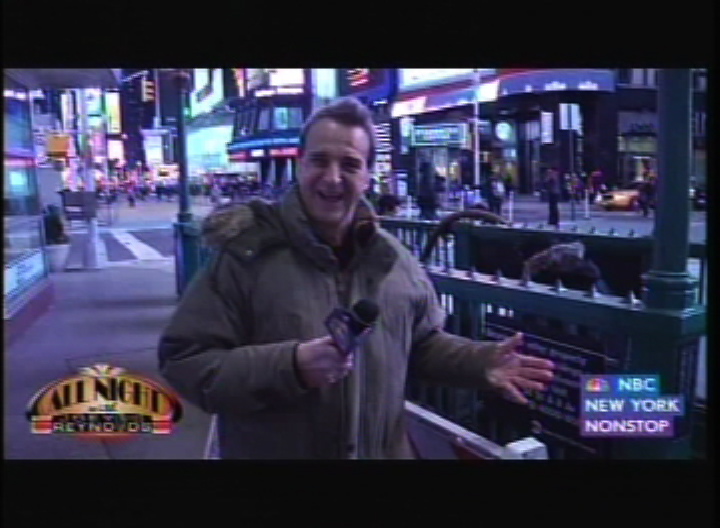
The talk show as hallucination: "All Night With Joey Reynolds" (part one)

We’ve all experienced something like it. You’re up late, you catch something unusual on television, and the next morning you’re not sure whether what you saw was real or a hallucination. I’ve been having that feeling for the past two months, and the hallucination in question definitely exists, and it is definitely called All Night with Joey Reynolds.

First, some background for those who’ve started reading this blog in the last few weeks or months. In March 2010 I wrote a post lamenting the cancellation by local radio station WOR of Joey Reynolds’ all-night talk show. In that post I mentioned Reynolds’ background — that he has been in the radio business about close to five decades and that his show was essential to the late night radio “scene” in NYC, as it was the very last talk/variety program on a commercial station at that hour (or basically any hour). When the show went off the air, Joey promised us he’d be back with a TV show that would be on “all night,” that would feature the same eclectic (and sometimes bizarre) mix of guests, and that would air live in Times Square.

Well, aside from the live aspect (All Night is taped an evening ahead of time), Joey has made good on that promise. The result is the most invigoratingly eccentric talk show to be seen on NYC TV since the departure of Joe Franklin and of cable-access staples Beyond Vaudeville and The Coca Crystal Show.

I’ve been watching All Night since its third night on the air, and the show is incredibly difficult to describe without offering a vigorously assembled montage of the many kinds of acts that have been featured on it thus far, and the various moments in which Joey has conversationally “tangented” wildly off from whatever he’s supposed to be discussing (perhaps that will appear on a future episode of the Funhouse TV show — yes, I’ve been recording All Night….). In the meantime, since NO ONE on the Net is chronicling what’s taking place on the show, and the webmasters of Joey’s own sites have put nothing new up for weeks now, I hereby tender a review of, and commentary on, the proceedings.

The show airs only in the NY tristate metro area on NBC, Channel 4.2 (that’s on the digital-converter-box lineup that few people are aware exists) and on pretty much every cable system on the channel known as “NBC Nonstop” (it’s tucked away neatly on Ch. 161 on my Time Warner lineup). Thus, you have to really know the channel exists to catch Reynolds’ show.

All Night actually lasts from midnight-2 a.m. five nights a week, meaning Reynolds and company come up with TEN HOURS (!) of new programming every week, ensuring that one can never be sure what is coming up next, even if you’ve seen the opening guest roster, which has often been inaccurate in the past few weeks — and now the staff has taken to sending out two guests when Joey introduces one, so even the host is taken aback by who walks out onto the set (!).

Thus far, I, my dad — who is the target demo for the show, a senior who stays up late — and an artist friend are the only ones I know monitoring the show on a nightly basis, just to see what’s on next and also to assure ourselves we didn’t hallucinate the weirdness that went down the night before. (“Did you see that Disco-yogi act?”, “Did I dream that a man in an Octopus costume and a ‘scream queen’ were interviewed about their comedy-horror access program??”, “Did a guy really eat a light bulb on-air last night???”, “Did Joey really spend 10 full minutes telling us how his car got repossessed the other day????”). All Night could *definitely* become a cult favorite, a la The Joe Franklin Show, if only anyone knew it was on the air…..

*****
So what exactly happens on the show? Its first cornerstone is its eclectic, and again often bizarre, guest roster. NYC is filled with performers who never get a break on TV, and so it’s terrific to see Reynolds and his producers showcasing local cabaret performers, unsigned rock bands, standup comedians, authors, and various specialty acts you never see on TV anymore — and will most likely never see, now that the MDA Association is cutting back the Jerry Lewis telethon to a mere six hours.

The guests sometimes appear in odd succession — thus, my favorite nights have had bizarre juxtapositions, like the night that the “Jewish hour” (see below) was followed by a mixed-martial arts demonstration (punctuated by an inappropriate queer joke by Joey — he is prone to un-p.c. utterances that fall flat, very flat), only to be trumped by a country singer who brought Joey several gifts from local area merchants. Joey chose to dote on a gift basket of cheese and its aroma — “it smells like feet,” Joey complained, at length, to the gift-giver before actually munching on the damned cheese and finding out it tasted okay (you won’t get those moments on the network talk shows, I guarantee you).

Joey has noted that he’s taking a leaf from the old Ed Sullivan Show, but then again he’s also expressed an admiration for Funhouse deity Steve Allen, Jack Paar, Carson, and Dick Cavett. All Night is thus a combination of both variety and talk, to very strange effect. Two particularly crammed-to-capacity shows had the following line-ups:

-celebrity impressionist Marilyn Michaels
-a group of All Night investors signed a contract with Joey on-air to solidify their involvement in the show (huh?)
-impressionist Bob Greenberg, who specializes in vintage comedians
-an impersonator known as “Carole Channing,” who solely does Miss Carol (and who discussed Funhouse favorite Skidoo with Greenberg!)
-comedian “Shecky Beagleman” (see below)
-a young singer/songwriter woman
-a sleight-of-hand master who performed con-artist card tricks
-a musician-songwriter and singer who got crammed in as the credits rolled

-hangdog-looking standup Phil Selman
-a gent with an impressively weird hairdo who is a comedy writer and spoke about stuttering (in reference to The King’s Speech)
-his cohort, a young woman who makes Lady Gaga parody videos
-a pretty good pop-rock band performed live
-an off-Broadway revue belter, who did a parody of Christina Aguilera fucking up the National Anthem
-the owners of a French restaurant
-a rabbi, who discussed recent international tumult, including Libya
-a singer-songwriter who came on to promote both his music and his starring role in a serial-killer drama that more than likely will be going the “DVD Premiere” route

Making All Night seem even more like a late-night fever dream that couldn’t possibly be on commercial TV are the very serious topics that are occasionally tackled by Joey, including his favorite, the 12-step program and various rehab facilities and their approaches to sobriety. Reynolds openly speaks about his own struggles with past addictions, which I respect (although when he discusses the struggles of one family member, it’s cringeworthy TV — one can’t help but think that it’s her private dilemma and none of our damned business….). These and other self-help discussions clash wildly with the singers, comedians, magicians, sports figures, and authors who’ve written celebrity bios or history tomes. All Night works well when it’s light (providing the guests are allowed to steer the conversation — which does happen occasionally), but runs aground when serious topics are explored.

For sheer conversational “swerves,” there is also nothing as powerful on the Joey program as mentions of the Las Vegas electronics show that he attends on an annual basis. He has derailed really interesting conversations — as with the brilliant comedian Paul Mooney and road-warrior standup Bob Altman (aka “Uncle Dirty") — just to talk about an electronics show that few, if any, folks at home are interested in. I’ll probe Joey’s odd conversational swerves and unusual interview approach in the upcoming second part of this blog post.

Now that I’ve raised the specter of Joey’s unwelcome verbal disruptions, let me sing the praises of segments on All Night that I thought were exemplary. It will come as no shock to those who read this blog regularly or watch the Funhouse TV show, but I’d point to two very touching obituary segments, and one senior-birthday one, that Joey hosted. The first instance was part of the one “Jewish hour” that aired on the TV show. For those who were not familiar with Reynolds’ WOR radio show, each week he hosted hours of the show he good-naturedly called “the Italian hour,” “the Jewish hour,” “the gay hour,” etc., featuring groups of his friends.

He did two Italian hours and one Jewish hour on All Night, and then declared to his announcer that putting the Jewish hour on TV had been a “big mistake,” since it had only worked on radio. (Given that this has been the ONLY thing I’ve heard him refer to in two months as a “mistake,” that’s quite an admission — but regular viewers and listeners will know he’s often not the best arbiter of what works or doesn’t on his own show.) All Night is a local show that works best with an emphasis on all things NYC — and the ethnic and gay hours definitely lived up to that, in spades.

In any case, the first and only TV Jewish hour featured a heartfelt tribute to Mickey Freeman, the Borscht Belt comedian and Bilko cast member whom I first found out about on Reynolds’ radio show. The second, equally emotional and well-handled item was a farewell to Charlie Callas. In this segment, Joey interviewed Callas’ close friend Albert Wunsch about Charlie’s sad final year, in which he experienced the tragic death of his wife and then slowly succumbed to depression. As I write this blog post, he’s doing a very entertaining series of segments paying tribute to the work of songwriter Ervin Drake (“It Was a Very Good Year”), who turned 92 this week. Despite Joey's protestations that All Night has “cross-generational” appeal, it’s clear that all the best aspects of the program have to do with nostalgia of one kind or another.

******
The show’s other hallmark besides its guest roster is its location, the NASDAQ building on the Southeast corner of 43rd Street in Times Square. The studio doubles as a financial news center during the day, and for two months now it’s been apparent that the odd decision to shoot the show *towards * the window adds nothing to the proceedings, and in fact is distracting and entertaining as hell in all the wrong ways. For instance, a guest will be offering a very serious thought on the Holocaust, America’s military commitment in Afghanistan, Iraq, and Libya, or their own health crisis, and suddenly your attention will be diverted by a teenage idiot doing jumping jacks in the window behind the person speaking.

This aspect has become something I wait for. When the show is simply being “radio on the TV” as it often is — with very little visual activity going on, except for the stray ventriloquist, magician, or dance acts — you instantly turn back to the TV the minute something deeply serious is introduced, because it’s absolutely certain that a passerby is going to be vaulting in the air, or pressing their face to the glass (it should be dynamite when summer hits the Square — can mooning be far behind?). Joey frequently tells his cameramen to get a shot of “our audience,” but as is usually the case with any local newscast, the idiots leaping up and down in the window don’t know, or care, what is actually happening in the TV studio in front of them.

Two weeks ago it appeared as if Joey and his producers had figured out the ultimate way to attract an audience of passersby to their street-level studio window: have sexy burlesque girls do dance numbers. In classic Joey-show fashion, though, in between the three burly-Q dancers, there was a performance by a local NYC Gilbert & Sullivan light operetta troupe, as well as a discussion with a self-help author. So a hula girl performed, then there was a discussion of the burlesque show, then a girl in a small sexy outfit twirled a baton (and kept dropping it — but who noticed?), and then a Gilbert & Sullivan song, some self-help talk (very heavy), and back to a chick in fishnets, dancing up a storm under the credits. To paraphrase Cindy Adams’ famous closing line: Only on Joey, kids, only on Joey!

The Times Square location has also spawned a rather awkward nightly man-in-the-street segment called “Reynolds’ Rap.” Teens and inebriated people can sometimes be seen chanting Joey’s name because a young, very exuberant comic named Frankie Hudak has gotten them to do so, but they have no idea who in the hell Joey is. But, hey, they’re on TV! During these segments, Joey corrals anyone walking by on Broadway to talk to him, resulting in one of two options: either he gets ridiculously frustrated because the people he’s speaking to don’t speak English (now, who exactly is walking through Times Square after 9 p.m. on a weekday work-night but tourists?). Or, Joey asks the interview subject to read the sign for his show in the window of the NASDAQ building, and tells them that he’s doing a TV show and they’ll be on it that very night (although, as noted, the show is currently being taped a day in advance).

In the second part of my review of Joey’s “incredibly strange” television show, I will probe how Joey’s runaway “talkaholism” makes the show even more hallucinatory and unlike anything you’ve ever seen on commercial TV. In the meantime, although he keeps mentioning that the show will be “triple-platformed” soon — on TV, the radio, and on the Internet — there are currently no updates being made to the show's website. A few (very few) clips from the first two weeks (primarily the first two shows) were put up on the show's YT channel, including this slice of Jackie “the Jokeman” Martling and local comic Dave Konig. Where else in the goddamned world will you hear Wheeler and Woolsey being namechecked?


The most interesting clips, however, have been put up by the guests themselves. Here is a musical performance by downtown NYC legend Phoebe Legere:


Russian entertainer Oleg Frisch puts his own spin on the evergreen “Goody Goody.” If you’ve taken the time read this far, oh, please do fast-forward to 8:00. Hey now!


Another, very special warbler, called the “singing CPA,” updated a Rolf Harris/Johnny Cash song “I’ve Been Everywhere,” to suit his chosen profession. Again, please take the time to fast-forward to 4:10 on this one:


Perhaps this one bit of comedy shtick best exemplifies many of the stranger guests that Joey has had on. Here, concept comedian “Shecky Beagleman” (it’s a she) guests as “Mrs. Bin Laden.” The lack of laughter in the studio (no audience!) makes this bit even more bizarre than it would be in another context. Sample this and know what it is like to hallucinate without the benefit of chemicals, chum:

Sunday, March 27, 2011

“Boom” and bust: the flamboyant flops of Elizabeth Taylor

Elizabeth Taylor’s death was greeted by the media as the certain passing of old Hollywood, which isn’t really true, as there is still a small group of “A-listers” from the Golden Age who are among us — Olivia de Havilland, Joan Fontaine, Kirk Douglas, and the indomitable Micky Rooney among others. Taylor, though, was a star whose private life had been endlessly probed by the media since the mid-1950s, and so the American public felt a greater familiarity with “Liz” (as she hated to be called) rather than, say, Olivia or Joan.

Taylor also “acted up” in her private life to a degree that Americans love. The very public dumping of spouses and gathering of new ones; the wearing of turbans, auspicious jewelry, and dresses that were either uniquely revealing or simply tacky; the appearances in a series of major studio prestige releases based on famous novels and plays, followed by decades of making odd decisions about what to act in (see below). Movie buffs often speculate about what James Dean and Marilyn Monroe would’ve been like had they lived to a ripe old age — the likelihood is that they might’ve been Brando and Taylor, both exuding star presence and overpowering personalities as they acted more and more eccentric with age.

Some of Taylor’s obits spoke rightly of her incredible presence on camera as a young woman and her iconic roles in the Fifties; other tributes interestingly tried to paint her as one of Hollywood’s finest actresses, which is where I have to offer up a public exploration of the darker moments in her screen career. She was indeed an incomparably beautiful child and teen, and had a sexy and commanding presence in her best-remembered films of the Fifties. But come the Sixties, her private life seemed to get the best of her, and she began to look much older than her years. By the early Seventies when I was a kid, Elizabeth was already an older-looking lady who wore, again, giant jewels and turbans in public, and looked very little like the visibly sexy chick in the slip from Cat on a Hot Tin Roof — and she was only in her 40s at the time.

It was most certainly the l’amour fou she shared with Richard Burton that deeply affected her looks and her public behavior, and most likely created her eccentric, misguided, and sometimes downright awful choices of film projects to appear in (god knows the incomparably talented Burton would make six terrible movies for every great one after the mid-Sixties….). I’m not certain if her bouts with alcoholism truly began with her relationship with Burton, but it seems to follow. Her career certainly reached its acme with him — that being the indisputably finest performance she ever gave, in Who’s Afraid of Virginia Woolf? — but after that peak, it was mostly valleys, with many odd ones at that.

It could’ve been possible that Taylor and Burton could have made more great films after Virginia Woolf — perhaps they could’ve made inspired choices that would’ve put them in the Pantheon of artistic film couples, along with John Cassavetes and Gena Rowlands. Instead, they picked dreary projects that somehow pointed up the despair and romantic longing that seems to have plagued their relationship even when they were happy together. In his introduction to Leonard Maltin’s The Great Movie Comedy Teams, the great character comic Billy Gilbert repeated an anecdote from the Sixties in which Burton told Taylor they should stop working together for a while.
He said, “We don’t want to become another Laurel and Hardy.” Whereupon Miss Taylor said, “Why? What’s so bad about Laurel and Hardy?” And I say, “What indeed?”

I’m with Elizabeth (and Billy) on that one, but yes, as a couple, they could’ve easily chosen better projects for both their solo performances and their “team-up” movies. There are a few exceptions: the film adaptation of Under Milk Wood (1972) has its small cult, and Hammersmith Is Out (1972) looks strangely inspired from the clips that are online. Perhaps this is the result of it having been directed by the multi-talented Peter Ustinov, or the fact that both Taylor and Burton were quite accomplished hams by the early Seventies, which certainly aids one in the playing of absurdist comedy. Taylor actually looks younger and more attractive in one clip found online (again, she was only 40 at the time), so perhaps a move to comedy might’ve been in order:


In the same year as those two “Liz and Dick” movies, Elizabeth appeared in X, Y and Zee, a film that has a cult following among the kinds of fans who, like a poster on YT, admit that they enjoyed her best when she was at her most obnoxious — and speaking of that, you MUST watch this piece of demented Michael Jackson-Elizabeth Taylor home-video footage loved by the same poster!

X, Y and Zee finds Taylor once again playing a bitchy character, which seems sadly to have been the main lesson she took from Virginia Woolf — not to find well-written scripts with memorable characters and indelible situations, but to simply star in movies where the maximum amount of bitchiness was possible. In this film, a bickering couple (Liz and Michael Caine) torture each other until the husband takes a lover (the late Susannah York), and Taylor’s character wants to win him back, or still have a part in his new relationship…. There’s a grim suicide-attempt scene here, but this sequence is far more indicative of the “mood of the moment,” the opening credits in which Taylor and Caine play ping-pong in slow, psychedelic motion:


One of the film’s more ridiculous scenes — in which Liz is tied up by hubby Caine and then seduces him while still bound — can be found here, but a handy little montage of her over-the-top moments in the picture is here:


As the Seventies went on, Taylor’s movie choices became more and more misguided and bizarre. It was apparent that she did not want to age into playing the mother of younger actresses — nor, as she got older, would she surrender to working in “holy senior” pictures like On Golden Pond and The Whales of August. She instead took a series of leading parts in films that are either just forgettably bad or wildly kitschy. The films were all flops, and thus, by the time she made a cameo in William Reichert’s stylish and smart conspiracy-theory thriller Winter Kills (1979), she was unbilled. I remember at the time the film was released (and failed, and was re-released and failed, and then quickly became a cult hit) that it was rumored that the omission of Taylor’s name from the credits was not her decision, but because her name on a marquee by that point was “box office poison.”

As the Seventies gave way to the Eighties and Nineties, Taylor involved herself with very important charitable work, so she moved away from acting. However, when she came back to it, she mostly starred in TV movies and did cartoon voice work. Her very last screen appearance was a cameo in the totally useless and godawful Flintstones movie with John Goodman. Although her last TV-movie was These Old Broads (2001), where she appeared in a role tailored for her by scripter (and onetime step-daughter) Carrie Fisher, the last real Elizabeth Taylor film was the Nicolas Roeg remake of Sweet Bird of Youth (1989), which was faithful to its source, but was instantly forgettable.

Taylor was indeed an icon, and I’m glad that various news outlets paid her reverent tribute. TCM will of course be showing her best films for years to come, so I feel no compunction in celebrating her worst films in this blog post. What’s say we start with the leaden Harold Prince adaptation of Stephen Sondheim’s A Little Night Music (1977), which found Liz doing what countless older stars did in the Sixties and Seventies, to no one’s pleasure: starring in a musical when they couldn’t sing! Here is the film’s opening number, with her original vocal restored:


She also delivered the best-remembered song in the score, “Send in the Clowns.” The song is a perfect Sondheim creation, and Taylor’s version is close to being one of the most lifeless versions of it, ever:


Another big-budget Seventies film starring Elizabeth was The Blue Bird (1976), an adaptation of the well-loved fairly tale (previously made with Shirley Temple) that showed that the great George Cukor was indeed “out of his era” in the Seventies (I enjoyed his subsequent Rich and Famous, but my memories of that one are far more wrapped up with its two stars than with the plot or the film itself). This incredibly overdone children’s movie was a U.S.-Soviet Union coproduction that suffers from the weirdness that afflicted most kiddie musicals in the Seventies (and might’ve benefited at least from an Newley-Bricusse score). Taylor stars as both the mother of the two lead children (Patsy Kensit is the little girl) and their guardian angel. The other stars include Ava Gardner (another stunning-looking actress whose career took a massive dip in the Sixties and the Seventies), Jane Fonda, Cicely Tyson, and Robert Morley. Watching scenes from it, one has the feeling they made The Blue Bird because they simply didn’t want to make yet another version of Alice in Wonderland….

The film is up in its entirety on YT, and here is the section that includes Taylor’s first appearance as the angel (singing yet again, but dubbed this time):


And the conclusion, with Liz in both her roles:


Now we move onto the fun stuff: There are two movies that are by far the most astoundingly campy endeavors that Taylor was involved in. The first has acquired a cult mostly because of recommendations from celebrity fans like John Waters; the second has yet to be fully rediscovered, but has its small cabal of appreciative kitsch-mongers, including myself. The first is Joseph Losey’s bizarrely overwrought (yet also strangely dour at times) film from a Tennessee Williams’ script, Boom (1968). The film stars Taylor, Burton, Noel Coward (as “the witch of Capri”), Joanna Shimkus, and the ever-fearsome tinyman Michael Dunn (“Miguelito Loveless,” to those who understand).

The film must be seen to be believed, but keep in mind that Williams was in his later, allegorical phase when this was written (he, like Burton, was also a massive talent drowning his genius in booze), and clearly the otherwise brilliant Losey decided to let the performers, sets, and insane costumes carry the piece (Taylor had previously starred in a far more suitably trippy Sixties film for Losey, called Secret Ceremony). Here is the overwrought trailer:


Elizabeth is mega-bitchy throughout the film, often with hilarious results:


I think the YT poster’s title for this clip, “Monkey off balcony!” does indeed say it all:


Coward’s “witch of Capri” talks about what Russ Meyer otherwise called “the Smell of Female”:


“La Liz” muses on memory and time. This notion later showed up in a George Carlin routine:


I found not one but three completely sincere music-videos paying tribute to this film (nothing kitschy or ironic intended). This is possibly the most serious of the three:


The other astoundingly bad-yet-unforgettable Elizabeth Taylor movie that deserves extended mention is the Italian English-language film The Driver’s Seat (1974). It is wildly artsy and overwrought, and she is unbelievably bad in it. From her appearance (wild hair, incredibly tacky psychedelic dress) to her bitchy delivery of the laughable dialogue (“When I diet, I diet. When I orgasm, I orgasm. I don’t believe in mixing the two cultures.”), she truly threw herself into the picture — to the extent of doing a sexy see-through bra scene and having two scenes in which men try to fuck her but she has to beat them off. You know you’re in odd territory when you’re seeing a goddess of “old Hollywood” trying to keep her head from being forced down into a young man’s lap so she doesn’t have to give him head. I’m not sure what Liz was thinking, but she gave us some happy memories in this wonderfully bad movie.

The poster who has uploaded the entire film onto YT doesn’t want bloggers to embed it. The poster has also put up a few dozen other films in their entirety, including some other Taylor flops (The Only Game in Town, Ash Wednesday, Night Watch), several Faye Dunaway titles, and at least two of my fave Seventies films (Who is Harry Kellerman….? and Play It As It Lays), as well as two Altman rarities (That Cold Day in the Park and HealtH). Oh, and Chu-chu and the Philly Flash, in case you were looking for it.

The Driver’s Seat can be found in its entirety here. Two other posters have thankfully excerpted some of the film’s finest moments, including Elizabeth’s opening tirade. How dare that woman show her a stainless dress!


All of the scenes she shares with Ian Bannen are collected here. Bannen is incredibly creepy and is one of the two men in the film who tries to get Liz to fuck him (but it’s only for his macrobiotic/one-orgasm-a-day diet).


In closing, I will point you toward a movie that is so bad it was never even released in America: Franco Zefferelli’s ridiculous Young Toscanini (1988), with C. Thomas Howell as Arturo Toscanini (you read that right). Elizabeth has a spotlighted supporting role as an opera diva who befriends the young Arturo — her opera scenes are of course dubbed by a real diva, and the film’s most memorable sight (besides Howell playing music while a rainstorm assails a tiny ship he’s on) is Elizabeth Taylor in blackface (chocolate face?) performing scenes from the opera (and lecturing the audience on equal rights, in the makeup). A colleague, Jerry Vermilye (author of The Films of Elizabeth Taylor) lent me a VHS copy of the film many years ago. The video was in Italian, but it was apparent even without subtitles or dubbing that Young Toscanini was yet another “interesting” (read: bizarre/wrongheaded) choice by the late, great Ms. Taylor….

Tuesday, March 22, 2011

British humor 5: Steve Coogan as Alan Partridge

Although most Americans would recognize him from his appearances in a series of multiplex comedies of varying quality, Steve Coogan has crafted a number of utterly indelible characters on British radio and TV — the full range of them can be viewed in his standup video The Man Who Thinks He’s It. The most memorable of all is Alan Partridge, who stands alongside Barth Gimble (Fernwood 2-Night) and Larry Sanders as one of the most lacerating parodies of self-involved talk-show hosts ever.

The creators of the Partridge character were the folks who produced the brilliant Chris Morris-Armando Iannucci radio news comedy On the Hour (1991-2); some of the early sketches done by Coogan as Partridge were written by the comedy team of Stewart Lee and Richard Herring. On the Hour became the impeccably nasty TV series The Day Today (1994) (see my piece on Chris Morris for info on that series). Two sample clips:


The writers spun off Alan from being a confused, ignorant sportscaster to being the ultimate egomaniacal (and doggedly ignorant) talk-show host in the perfect Knowing Me, Knowing You with Alan Partridge, which began on radio in 1992 (the full run of the series can be found here) and wound up, naturally enough, as a six-episode TV series in 1994 (the full run of which can be found here).

Sample clips: Alan is hypnotized by “Tony Le Mesmer” (David Schneider) and is tied to the “Wheel of Death”:


A political debate which presents the finest moment of actor-playwright Patrick Marber’s career (at least in my mind), his turn as fictitious Parliament candidate “Lt. Col. Kojak Slaphead III”:


Alan interviews the lesbian hostesses who will be taking over his timeslot:


Alan performs an ABBA medley with an American singer (played by Rebecca Front, with more than a hint of “Liza with a Z” in evidence):


Since that last medley worked so well on the show, Coogan did an equally wonderful Kate Bush medley in his live stage show:


A lot of the stray Partridge appearances have appeared on the DVDs of the shows released in the U.S. Here’s one I’d never seen, with Coogan and Marber at the BAFTA Tech Awards in 1994:


On Clive James Talks Back in 1997:


Another rarity: Alan shows up on Armando Iannucci’s “Election Night Armistice” special:


Knowing Me, Knowing You was followed a few years later by the sitcom I’m Alan Partridge (1997), where we follow Alan as he spirals down in show business. The show is a perfect example of an exquisite British TV comedy in that it focused around a brilliantly conceived “grotesque” comic character; it ran a minimum number of episodes (six per season, two seasons); the creators waited several years (five in fact) to do a second season that was as good as the first; and the downhill journey sketched in the show reflected countless annoying celebrities from several different arms of show business (gone was the simple focus on talk shows).

The entire series is on YT here. Sample clips: Alan “sympathizes” with his senior-citizen manager:


A key scene in one episode involves Alan being furious at his friend having taped over his copy of The Spy Who Loved Me. Here, a fan puts scenes from the film over his frantic recreation of its Roger Moore Bond-ian badness:


And a fave moment for me that enshrines the world “mentalist”:


After the 2002 second season of I’m Alan Partridge, Coogan seemed to retire the character for several years, but he did trot out new embarrassments for Alan in live shows like this 2009 “personal development seminar” that somehow becomes a play about Thomas More:


For years there has been talk about an Alan Partridge feature — which could be exquisite if scripted by the folks who did the original three TV series — but in the meantime there has been no new Partridge “product.” In late 2010, Coogan and colleagues (all sadly uncredited) decided to resurrect the character in what seemed like a crass commercial ploy, a series of “webisodes” sponsored by Fosters Lager. We in America have been “blocked” from seeing the official uploads of the shows, but thankfully dutiful fans have made all twelve episodes available on YT (all except No. 10, which lingers somewhere in the darkness).

I’m happy to report, now that the show have been “unlocked” for those who don’t live in the U.K., that the Mid Morning Matters with Alan Partridge episodes are short, smart, and wonderfully funny. The premise is that Alan, somehow still finding work in show biz, is now doing the mid-morning slot at “North Norfolk Digital” radio, where we are able to watch him both on- and off-mic, thanks to webcams.

The claustrophobic staging of the episodes is a masterstroke, and the plotting — in which Alan’s “Sidekick Simon” is eventually replaced by a younger blonde whom Alan has a crush on — gives us more reasons to simultaneously pity and loathe Alan. Mid Morning Matters essentially works as a radio play, but the scripters (again, sadly uncredited) let Coogan do some wonderful face and physical work, as well as indulge in some truly golden silences. Here is the first episode, in which Alan discusses condiments and bicycling:


As the episodes continue, he engages in moronic radio contests (choose the “best” Norfolk person ever, give your favorite example of “forced celebrity breeding,” choose which animal species to make extinct) and does incompetent interviews with local guests. One of the best episodes, number 5, features an almost entirely solo turn by Coogan, as Alan talks with an Irish shepherd, is pranked by another digital radio service, and reads an endless “Sad Story”:


The next to last show finds Alan breaking in his new radio partner and answering calls with a local “agony aunt” (advice columnist):


The Fosters project thus turns out to be another pathetic and wonderfully funny chapter in the life of the obnoxious, delusional, and very familiar Mr. Alan Partridge. Since Coogan regularly buries the character and then digs him up again, hopefully there will be more appearances by this brilliant comic creation in the years to come.

Wednesday, March 9, 2011

In and Out of Fashion: Deceased Artiste Annie Girardot

I sing the virtues of character performers all the time on this blog, and sometimes “A-list” performers age into “character-hood,” and do so quite well. Such was the case with Annie Girardot, who was initially a sex kitten in French film (as so many French actresses in the Fifties and early Sixties were), and then developed into both a very talented actress and an éminence grise whose presence connoted that a film was definitely of a higher caliber.

It was noted in some of her obits that in a 1972 popularity poll of the French public Girardot scored higher than both Bardot and Moreau. Well, popularity polls don't really count for much, and the popularity earned can be too soon gone. What was important was that Madame Girardot kept on working throughout her career, appearing in several films a year. It was also noted in her obits, especially in the French press, that her family and show business friends (including La Bardot) said that it was a tragedy how Annie was “forgotten” by the French cinema, with special venom directed at the French New Wave filmmakers.

I would step to their defense to note that the New Wave was never an organized unit, so there was no “decision” by the filmmakers from that movement blackballing Girardot. She fell victim, unfortunately, to what happens to older actresses all the time in the film world: she was “in” and then she was “out.” To her credit, she kept on working, all through both phrases of her career.

In 1995 she publicly acknowledged that she loved working in French cinema when she won the Best Supporting Actress award at the Cesars for Claude Lelouch’s adaptation of Les Miserables (more below). Perhaps the most dramatic and sincerely brave thing she did occurred in 2006, when she publicly revealed she was suffering from Alzheimer’s disease. Girardot became “the public face” of the condition in France, and participated in a very moving documentary called Ainsi Va La Vie that you can see scenes from below.

I will note that the Girardot clips in this post are for the most part in French with no English subs (unless I mention that there are subs). In the case of the films I’ve picked, though, the visuals and her fine acting shine through, whether you’re fluent in French, passable at best (as I am), or don’t know a word of the language.

There’s no better way to start off than this very beautiful montage, which the YT poster says he didn’t create but “found online.” Surely it was done for a celebration of Girardot’s work, possibly toward the end of her life. In any case, it is a beautiful summation of over four decades of an actress’s work:


A very cute clip from “Déclic et des claques” (1965):


A TV special hosted by Annie in 1959 feature none other than Edith Piaf as her special guest. I believe the song Piaf sang is here, but here is the host segment with the two women chatting:


The turning point for Girardot was her supporting performance in Rocco and his Brothers (1960). It was a watershed in terms of her professional life, since the film was a major success across Europe and an arthouse favorite in America. As for her personal life, she married the man who kills her in the film, actor Renato Salvatori. She remained married to him until his death in 1988, but they had been officially separated for the last years of the relationship. The entire Visconti classic can be found here. Here is a key scene featuring Girardot’s character:


Girardot worked alternately with French and Italian directors in the Sixties making films like Mario Monicelli’s Les Camarades (1963). My favorite moments from her career come at this point, when she worked three times for the inimitable Marco Ferreri. (Check out segments from my interview with Signore Ferreri). The first of the three contained what was without question Annie’s most daring move: staring as a hirsute woman exploited as a freak by Ugo Tognazzi in Ferreri’s sad/funny/weird The Ape Woman (1964). Here is one clip from the pic (which was released with two different endings):


A bit more of the brave, hairy Annie:


So, pretty much nothing Girardot would do in her career could be a surprise after she took that first chance with Marco to appear as an ape lady (and, remember, that when I interviewed Il Maestro Marco he did claim that his actors did nothing embarrassing in his pictures. The pictorial evidence sorta contradicts that….). She next appeared in a Marco movie as the sexy maid that Michel Piccoli cheats on his hot wife (Anita Pallenberg) with in the low-key-to-the-max supercrazy allegorical Dillinger is Dead (1969). Scenes between the two can be found here:


and here:


Annie’s appearance in another Marco mindfuck The Seed of Man is not online, but it is quite something, as again she plays the provocatrice for a seemingly post-nuke Adam and Eve (the very sexy snake in the garden, who meets a very nasty but not entirely un-Biblical end). The end of that pic can be found here. Annie’s coolest, most psychedelic-Sixties pic can be found in various places on YT, however. It is called Erotissimo, was made in 1969, and stars her as the wife of an executive who is trying to deal with the overflow of sexual material she sees in popular culture. Two cool-as-hell scenes that are worth your attention but do not feature Girardot are available here and here. This should give you an impression of how Sixties the pic is:


And this supplies us with Annie in aviatrix gear singing a tune called “La Femme Faux Cils,” with women’s magazine ads intercut, for the full psych effect:


And just in case you weren’t sure if the film was a bona fide piece of crazed Sixties creativity, here is Annie meeting a guest star we love very much in the Funhouse (with English subtitles!):


Girardot’s films are not out in great profusion on DVD, but Les Novices (1970) is. Any film that starts with cute nuns stripping down to bras and panties, and then follows a novice (Bardot) and a hooker (Girardot) as they try to raise dough in various ways on the streets of Paris, of course deserves our attention, but it’s a cute entertainment, not a major comedy by any means. The biggest surprise on the film’s credits is that it was written by Paul Gégauff, whom I wrote about in my Deceased Artiste tribute to Claude Chabrol. IMDB also lists Chabrol as having done uncredited direction on the film. I would think if he really contributed to it, it would’ve been just a slight bit sleazier and sexier…. Here is the trailer:


One of my favorite underrated French filmmakers is the darkly comic master Bertrand Blier. Girardot had a support role in his very strange “road movie” Merci La Vie (1991):


Annie and the great Chabrol/Eustache star Bernardette Lafont in a scene from the women’s prison drama (warning: not much sexploitation here!) Les Prisonniéres (1988 ):


Girardot’s career was brought “back to life” with her supporting role in Lelouch’s adaptation of Les Miserables (1995) starring Belmondo. I will confess I have not seen the film, but this is a scene that appears to have been Annie’s “bravura moment”:


As with most aging performers, Girardot’s final great roles were as mothers of younger stars — she was Adjani’s mom in La Gifle (1974), and played Huppert’s mother twice, first in Doctor Francoise Gailland (1976), and then in Michael Haneke’s disturbing La Pianist (2001):


The final triumph of Madame Girardot was not a fiction film, it was a TV documentary called Annie Girardot: Ainsi Va La Vie, which aired on French TV in 2008. As noted above, she bravely announced she had Alzheimer’s in 2006, and was thereafter known to the French public as a sufferer of the condition. This documentary found her reviewing her career and also interacting with her family. This segment begins with the important moment at the Cesars in 1995 where she won the Best Supporting Actress honor and there wasn’t a dry eye in the house, with several of her women colleagues deeply moved by her speech:


This segment from Ainsi is exceptionally sad but heroic, as Annie talks about her condition. Like many great French stars, her voice changed over the years due to constant smoking, but here the habit enhances her “mysterious” quality. Even in decline, she had a radiant and intriguing screen presence:

Sunday, March 6, 2011

Bye Bye, Baby: Deceased Artiste Jane Russell

Hollywood during WWII was extremely repressed, but there were always the pin-up girls, Betty and Rita and Lana and the amply bosomed Jane Russell, who died last week at 89. Russell for me has always belonged to that category of actresses who looked seethingly sexy in photos, but was never as red-hot on screen. Perhaps it was her reserve on camera, plus the fact that underneath it all we were aware that Russell the sexbomb was also Russell the Very Christian Girl. She was an imposingly sexy babe on screen, but she wasn’t the best actress (although she did study with Maria Ouspenskaya, so maybe that explains why she played gypsy babes so well) and was not reserved in the even more appealing way that Kim Novak was (a sex queen who had you coming to her rather than doing the Marilyn thing of coming straight at you).

In any case, Ms. Russsell was quite identified throughout the years with her chest (38D), from her headline-fetching “censored” debut in Howard Hughes’ dirty-for-its-time The Outlaw (1943) to the very tame films she made that showcased her chest in musical numbers or in the very titles of the pics themselves (including Double Dynamite, which found her getting star billing over Groucho Marx and Frank Sinatra, thanks to Hughes) to her ubiquitous ads for the Playtex Cross Your Heart bra in her later years.

As I went through the clips on YT to discover the best possible tributes to Jane, it became evident that she had three fan bases: men who really dig the sexbombs of the Forties; classic movie fans who liked her somewhat dominating presence in adventure pictures and musicals; and gay fans, who love old movie divas and especially those like Russell whose big-screen identity was openly classified as being of “gay interest” by no less a filmmaking master than Howard Hawks (see below), who in Gentlemen Prefer Blondes actually achieved the impressive feat of making Busby Berkeley seem subtle.

First, the photos. Here is a montage of pics accompanied by Russell singing a song called “Boin-n-n-ng.” Yeah, the Forties were a demure decade all right….


A song I like a lot being given the “steamy” treatment by Russell. She wasn’t Julie London, but she could actually warble pretty well:


She only made 22 films in all, 18 during the Forties and Fifties. This one started it all, and this YT poster has pared The Outlaw down to only the most “provocative” scenes:


A few years later Russell was fit for mainstream Hollywood and appeared in such family-friendly fare as Son of Paleface (1952), opposite Bob Hope and Roy Rogers. Here the trio sings the film’s best-remembered tune:


The aforementioned Groucho-Sinatra pic where Jane received top billing, Double Dynamite (1951). It’s a very slight movie, but fascinating for the fact that someone did actually think Grouch and Frank would make a good comedy team:


Macao (1952), a classic adventure picture, with touches of stylization provided by the initial director (Josef von Sternberg) and embellished by the director who took over (Nicholas Ray). The script isn’t much, but the cast is perfect and, yes, Russell actually does have two physical tussles with Big Bob Mitchum and was a great match for him physically:


Howard Hawks was indeed a Master, and he knew back in 1953 that there was, let us say, an “alternative” audience for the major sex symbols of the era. He openly acknowledged the gay male viewer in the camp staging of “Ain’t There Anyone Here for Love?” in Gentlemen Prefer Blondes. The film is available in its entirety here, and the musical number is here:


Here is Jane in a very “provocative” outfit (for the time) in The French Line (1953). UPDATE: I had initially linked to this version of the following musical number, but the brilliant RC has noted to me that The French Line was censored at the time it came out, to the extent that there were two different versions of this number. The one I initially linked to was the censored version, which used an alternate take of the scene that showed Russell in a very long shot. The uncensored version of the number included not only a clearer view of her provocative one-piece outfit, but also a bit of spoken-word patter in the middle that RC rightly notes finds "Jane channeling two MMs: Marilyn Monroe and Moms Mabley." The proper, "dirtier" version is below, and here is a quick link to an interview clip where Russell talks about the censorship of her films (and mentions how The French Line was condemned by those perpetual tight asses over at the Catholic Legion of Decency). The fact that The French Line was a 3D picture must've pleased teenage boys quite a lot at the time:


As with Sophia in Italy and Raquel in the Sixties (and Bisset in the Seventies), directors figured that the best way to showcase an actress’s “assets” was to keep her in the water:


The sequel to Gentlemen Prefer Blondes, called Gentlemen Marry Brunettes (1955), has never been available on VHS or DVD, and has really not been shown much (if at all) on the classic movie nets. This wildly crazy, racist musical number might explain why. UPDATE: I've been informed by Paul G. that the film is available (streaming only) on Netflix. If anyone wants to deliver a report of how bad (or good) it is, please pass it on:


One of the most colorful, eye-filling movies Russell made was the earnestly sincere but still pretty odd saga of gypsy life made by Nicholas Ray, Hot Blood (1956). No intrepid soul has put up the energetic catfight Jane has in one scene in the film, but here is a small sample of the film:


Jane in full Xtian-lady mode on TV as part of “the Hollywood Christian Group,” a singing quartet composed of Connie Haines, Beryl Davis, Rhonda Fleming, and Russell. This is some super-wholesome stuff, so wholesome it has been spoofed by drag queens on YT:


Jane guests on Italian TV with a bilingual host named Heather. The two talk about Jane’s latter-day pursuits, sing together, and James Coburn comes out to say goodnight (!):


Russell essentially retired from show business after the Sixties, but made an occasional TV appearance and also did some live performances (what is there left to do after playing a rape victim in the first Billy Jack film?). Although there are indeed some very nice home-video moments (like this one, at the Hollywood Heritage Museum), the most impressive is this performance at the Castro Theater in San Francisco. Many of her obits quoted her description of herself: "These days I am a teetotal, mean-spirited, right-wing, narrow-minded, conservative Christian bigot, but not a racist.” Clearly, she was okay with gay audiences, though, and she does seem a little butch here as she sings a theme song she says was written for her by Peggy Lee, “Big Bad Jane,” and the Blondes song “Bye Bye, Baby”:

Friday, March 4, 2011

Why is the Oscarcast so horrible, no matter what changes are made?

It is a truism that the Oscarcast can’t help but suck horribly. No matter what tweaks are put into effect, no matter what technological innovations are displayed, the show is a stiff for several reasons, including:

—the fact that moviemakers only make movies well, they can’t put on a live show properly (haven’t ever been able to);
—it’s grating to watch a community pat itself on the back for over three hours of TV time;
—the attempts to snare young viewers are hopeless and pathetic (young viewers have better things to do than watch the Oscars)
—and the lip service given to the “respect” the Academy has for its legacy and elders is of course disproved by the disrespectful treatment those same elders receive during the program (which is related to the previous point).

So, let’s run through the statistics, shall we? What I’ve always found interesting, and thoroughly obnoxious, about the Oscars is the constant back-patting about what a great industry they’re a part of. If you check the MPAA’s website it is noted that 560 films were theatrically distributed in America last year — if you remove nearly half of those in the expectation that many are independent features (one hopes) and/or foreign releases (these days, quite few), you still have a good 300 films made and released by Hollywood annually.

So the fact that a small handful of movies get saluted at the Oscars each year has always been a don’t-watch-that-watch-this bit of misdirection. The fact that the “sweep” factor finds less than 10 films nabbing most of the nominations contributes to this, as does the sporadic instances, as with this year’s King’s Speech, where a film made in the U.K. receives many nominations and most of the top prizes. So Hollywood is indeed proud of the fact that about 10 out of every 300 films that are produced here are very good — and that better movies are often made elsewhere.

And then we come to the dead folk. As regular readers of this blog know, I am devoted to saluting the Deceased Artistes whose work I loved, so of course one of the reasons I have to watch the Oscarcast is to see what they do with their annual necrology segment. For years it was an odd popularity contest in which they led up to the biggest names, and the audience was encouraged to applaud wildly at whomever they recognized. That iniquity was taken away a few years ago, when they started doing severely solemn necrologies that gave less than 10-15 seconds to every person saluted.

This year each person was given approximately three and a half seconds of screen time, no matter if they were an agent, an executive, a producer, or a Hollywood stalwart performer like Tony Curtis or Dennis Hopper. Four seconds, and yer out! So much for the Academy of Motion Picture Arts and Sciences’ respect towards its elders.

Of course, there is also the shameful move instituted last year, where the Lifetime Achievement awards were shunted off the program and thrown into a separate event held months before the Oscar telecast. This year our Funhouse deity Uncle Jean (aka Jean-Luc Godard) didn’t make the trip from Switzerland to Hollywood to receive his five-decades-delayed Oscar for Breathless, but the three other honorees were in attendance, and all four gentlemen were given 20-25 SECONDS each to be saluted on the puffed-up Oscar show.

Some of the tech awards remain, the shorts remain, the wretchedly bad comedy bits remain, the tributes that come out of the blue and go back into the blue and make no sense remain — Billy Crystal talking to Bob Hope? (That guy’s immense ego hasn’t deflated since he made himself a partner to Laurel and Hardy some years ago) — and yet the Lifetime honorees get 25 seconds each.

It was only natural that one of those honorees, the brilliant film historian Kevin Brownlow, displayed the MOST respect for Hollywood’s legacy of filmmaking by simply saying in his acceptance speech, "I really do regret the loss of black and white...."